


Shane Sturgeon

Shane Sturgeon

Publisher & Chief Technologist

Shane Sturgeon is the Co-Publisher and Chief Technologist of HDTV Magazine, an industry publication with HDTV roots going back to 1984, when Dale Cripps founded The HDTV Newsletter. Today, HDTV Magazine is a leading online resource for HDTV news and information and captures the eyes and imaginations of over 3 million visitors annually. Mr. Sturgeon has a background in information technology and has served in various consulting capacities for Fortune 500 companies such as J.P. Morgan Chase, Verizon Communications, Proctor & Gamble and Nationwide Insurance. He has a Bachelor of Science in Computer Science from Wright State University.

15 articles
A Comparison of Movie Download Services

A Comparison of Movie Download Services

This comparison of early internet movie download services evaluates Amazon Unbox, Apple TV, DishONLINE, Microsoft Xbox 360, and VUDU across usability, audio/video quality, selection, and cost. VUDU stands out by delivering 1080p/24 H.264 High Profile HD content via peer-to-peer distribution requiring only a 4 Mbps connection, while Apple TV tops out at 720p/24 and Xbox 360 HD downloads proved impractically slow in testing. For consumers choosing between these platforms, the gap in video quality and download speed is significant enough to meaningfully affect the viewing experience.

Articles
Showdown: Apple TV vs. VUDU

Showdown: Apple TV vs. VUDU

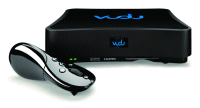
Apple TV and VUDU compete as hardware-based HD movie rental platforms, with Apple TV capped at 720p/24fps source resolution versus VUDU's 1080p/24fps H.264 High Profile encoding for HD content. VUDU's peer-to-peer delivery enables near-instant playback on a 4 Mbps connection, while Apple TV requires roughly 15 minutes before a downloaded HD title can begin. Buyers prioritizing lower entry cost and HD rental pricing will favor Apple TV at $229, while those seeking better resolution, a 5,000-plus title library, and instant access will find VUDU the stronger choice.

Columns

CES 2008: New HDTV Products and Technology Overview

CES 2008 showcased a broad shift in HDTV development, with manufacturers emphasizing 120Hz panels, HDMI-CEC integration, and 1080p across LCD and plasma lineups from LG, Sony, Sharp, and others. The format war gained clarity as Warner Brothers announced Blu-ray exclusivity, while the WirelessHD Consortium revealed a 4Gbit/s wireless standard capable of sustaining full 1080p and supporting DTS HD Master Audio. For consumers, these developments signal a maturing HD ecosystem with clearer format choices and expanding HD content delivery options.

Articles

Which is More Consumer Friendly: HD DVD or Blu-ray?

HD DVD and Blu-ray both deliver 1080p resolution at bitrates exceeding 36Mbit/s, a dramatic improvement over standard DVD's 480-line picture and 11Mbit/s ceiling, with lossless audio codecs including Dolby TrueHD and DTS-HD Master Audio on both formats. HD DVD holds a practical edge through mandatory player standardization, built-in internet firmware updates, region-free playback, and street prices near $99-$169 versus Blu-ray's $357 average. For consumers still undecided heading into the 2007 holiday season, these hardware and usability factors make HD DVD the more straightforward and cost-effective investment.

Articles

DirecTV - The March to 100 National High Definition Channels

DirecTV's 2007 push to deliver 100 national HD channels is enabled by the launch of satellites DirecTV 10 and 11, which support a new transmission protocol and the more efficient MPEG-4/AVC codec to maximize available bandwidth. Of the 100 promised channels, roughly 70 to 80 are expected to be year-round offerings, with NFL Sunday Ticket multi-feed channels and East/West network simulcasts counting toward the total. Subscribers can expect no price increase beyond the existing $9.99 HD package fee, though final channel quality and the full lineup remain to be confirmed at launch.

Articles
CES 2007 Predictions

CES 2007 Predictions

Ahead of CES 2007, this set of predictions covers a broad range of consumer electronics developments, including HDMI 1.3 adoption by receiver manufacturers such as Denon and Yamaha, expanded 1080p display lineups, and a potential second-generation Xbox 360 with HDMI output before studios activate Image Constraint Token (ICT) restrictions on component video. Additional forecasts target HD DVD studio additions, a Blu-ray/HD DVD combo player announcement, and wireless HD video transmission over the then-unratified 802.11n standard. Readers tracking home theater upgrades will find the HDMI 1.3 and ICT timeline discussion particularly relevant to near-term buying decisions.

Articles
Podcasting in High Definition

Podcasting in High Definition

A curated guide to HD-focused podcasts available through iTunes covers both informational shows and video podcasts shot at 720p, 1080i, or 1080p resolutions, with downloads sized accordingly for full-quality playback. Standouts include MacBreak, produced in 1080p, and mariposaHD, distributed at the full 1920x1080 pixel resolution of the 1080i standard. For viewers hungry for HD content beyond their local provider, these free feeds offer a practical way to access high-resolution video and stay current on HDTV news and reviews.

Articles

Fall 2006 HDTV Study Results

The Fall 2006 HDTV Study surveyed 1,281 respondents from August through October 2006, revealing that LCD displays were nearly twice as prevalent as Plasma among owners, and that HD DVD held only a marginal ~4% preference over Blu-ray at a time when Samsung Blu-ray players were experiencing significant quality issues. One in four respondents planned to purchase an HDTV within six months, with LCD again dominating intended purchases at more than twice the rate of Plasma, while LCoS technology showed signs of gaining ground aided by Sony's SXRD lineup. For consumers navigating the format war, the data suggests most were willing to wait for a clear winner rather than risk another costly format commitment.

Articles
HD DVD vs. Blu-ray: And the Winner is ... No One

HD DVD vs. Blu-ray: And the Winner is ... No One

HD DVD and Blu-ray were locked in a closely contested format war as of mid-2006, with HD DVD holding a two-month market lead and a roughly 50% price advantage over Blu-ray players, while Blu-ray countered with a 50GB dual-layer capacity edge and broader PC industry backing from Apple, Dell, HP, and Sony. Microsoft's $200 Xbox 360 HD DVD add-on and Sony's PS3 launch on November 17th were positioned as key adoption drivers for their respective formats. Consumers waiting for a clear winner faced an indefinite wait, with combo players from Korean manufacturers emerging as the most practical near-term resolution.

Articles
HD DVD Primer

HD DVD Primer

HD DVD uses a 405nm blue-violet laser and a 36.55Mbps user bit rate to deliver over 3 times the storage density of standard DVD, with single-layer capacity of 15GB versus DVD's 4.7GB. Audio support spans mandatory codecs including Dolby Digital Plus and Dolby TrueHD at up to 8 channels of 24-bit/96kHz, plus optional DTS-HD at sampling rates up to 192kHz. The two launch players from Toshiba, the HD-A1 ($499.99) and HD-XA1 ($799.99), both output via HDMI 1.1 with HDCP at 720p or 1080i, making format adoption accessible at multiple price points.

Articles

CES - Day 4

Coverage from the 2006 Consumer Electronics Show highlights three notable product announcements: Toshiba's HD DVD laptop featuring a 1080p display and HDMI output priced around $3000, LG's $50 ATSC-to-NTSC set-top box targeting the government digital TV subsidy program, and Audio Authority's 1166 six-input DVI switcher with HDCP support and component video up-conversion retailing at $2000. These products reflect the industry's push toward HD adoption across laptops, broadcast reception, and AV switching hardware. Consumers evaluating HD infrastructure in early 2006 would find these announcements relevant to both home theater and digital transition planning.

Articles

CES - Day 3

DirecTV unveiled a new HD DVR at CES 2006 featuring dual tuners and storage capacities of 30 hours in MPEG-2, 50 hours in MPEG-4, or up to 200 hours of SD content, replacing TiVo software with a proprietary platform that includes Series Link recording. The updated system requires a new 29in x 26in five-LNB dish spanning orbital positions at 99, 101, 103, 110, and 119 degrees, supported by four new satellites delivering over 1,500 local and 150 national HD channels. Subscribers can upgrade for $99 before the MPEG-2 phase-out begins in mid-2006, with free upgrades planned once legacy signals are switched off.

Articles

CES - Day 2

TDK showcased a prototype 100GB Blu-Ray disc at CES 2006, using 4 layers of 25GB each and recording at 72Mbps - double the then-current 36Mbps specification, with tests reaching 216Mbps at 6x speed. Microsoft Windows Vista Media Center was confirmed to include HD-DVD support at launch, while Sony announced Blu-Ray support in their XL3 HTPC. Consumers evaluating next-gen disc formats or Media Center upgrades should note that Vista compatibility will depend on hardware vendor certification.

Articles

CES - Day 1

Sony's Blu-Ray lineup, set for March ordering, will launch with 20 titles and full backward compatibility across DVD and CD formats, while the PlayStation 3 will integrate Blu-Ray hardware with backward compatibility to prior PlayStation generations. Dish Network announced a transition to MPEG4-only HD delivery across a new ViP STB series, including the 622, the first MPEG4 PVR, expanding to 25 HD channels at $20 per month by February 1st. Existing subscribers wanting access to these new channels will require a hardware upgrade to one of the new ViP set-top boxes.

Articles

CES - Day 0

Pioneer, Toshiba, Sony, and Panasonic used CES 2006 pre-show press conferences to stake out positions in the emerging high-definition disc format war, with Toshiba pricing its HD-DVD players at $499.99 and $799.99 for a March launch while Pioneer set its BD-ROM player at $1,800 for a May release. Microsoft confirmed an HD-DVD drive accessory for Xbox 360 and announced Windows Vista would support Digital Cable tuning via CableCard. Consumers evaluating HD formats early in 2006 faced a fragmented landscape with limited title availability and unresolved 1080p support gaps on the HD-DVD side.

Articles