
CES 2010, PART III: Trends and takeaways
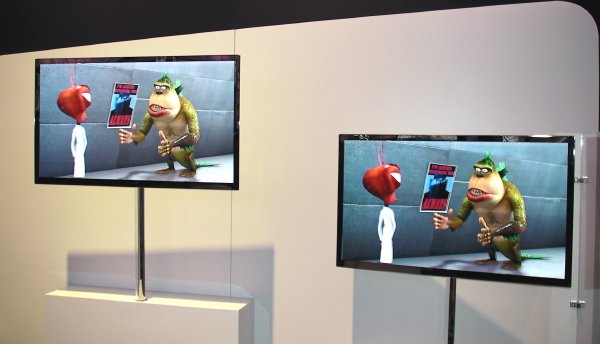
In this, my final installment of CES 2010 coverage, I’m going to cut through the pile of press releases and hype and focus on several clear trends that emerged from this years’ show. Some were pretty obvious (3D), others not so obvious (shifting power in the TV marketplace).
3D: Yep, it was everywhere. After about the first 10 demonstrations, I declined the offer of glasses and simply took notes on the manufacturer and products demonstrated. TV manufacturers really, REALLY want 3D in the home to take off in 2010, providing more momentum for sales in an era of “me too” thin TV styles and falling prices.
Problem is, many consumers just bought their first LCD or plasma HDTV in the past couple of years, and they’re in no hurry to upgrade to 3D-compatible models. While cell phones and other personal electronics turn over every couple of years, there is an expectation that TVs will last a lot longer…probably 10 years at least.
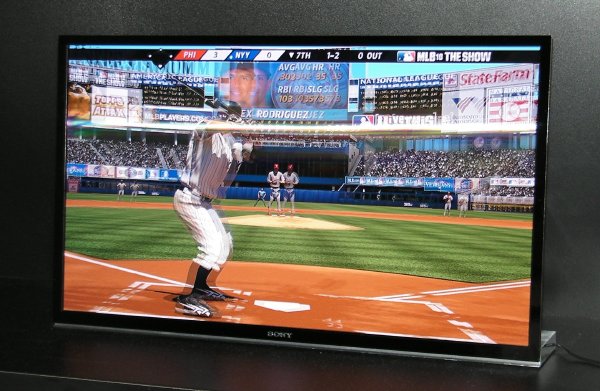
3D is coming, ready or not!
So I see a potential market for 3D converter boxes, just like the ATSC converter boxes of a decade ago. Such boxes will be able to process 3D content into a format that uses the highest-possible refresh rate of the TV, detected through HDMI connections. It may be 120Hz, enabling active shutter 3D. Or, the TV may be limited to segmented or interlaced 3D presentations, using two frames @ 60Hz each for a total frame rate of 30Hz. Will it be the best 3D available? No, but it will suffice to get viewers started.
As for delivery platforms, Blu-ray and DVRs currently have the edge over streaming and broadband downloads. The file sizes are just too large and the bit rates non-sustainable over the typical broadband connection. Downloads to flash memory will also play a big part in the near future of 3D.
NeTVs: Consumers love ‘em, and crave more Internet-connected products. But they want those connections to be wireless, NOT wired. DisplaySearch predicted that there would be upwards to 70 million NeTVs sold by 2012, with a majority of those in Western Europe and North America.
The popularity of using a TV to find Internet video just like TV other channels shows that Microsoft had it exactly backwards in the late 1990s – they wanted you to watch TV on your computer. Why did anyone think that would be a good idea? (Sorry, Bill and Steve, ya can’t win ‘em all…)
The best thing about NeTVs is their relatively low implementation costs for manufacturers. And the growth of widgets and video streaming is amazing! Even Netflix has acknowledged that their future business model will be based on streaming and digital downloads, not optical discs.
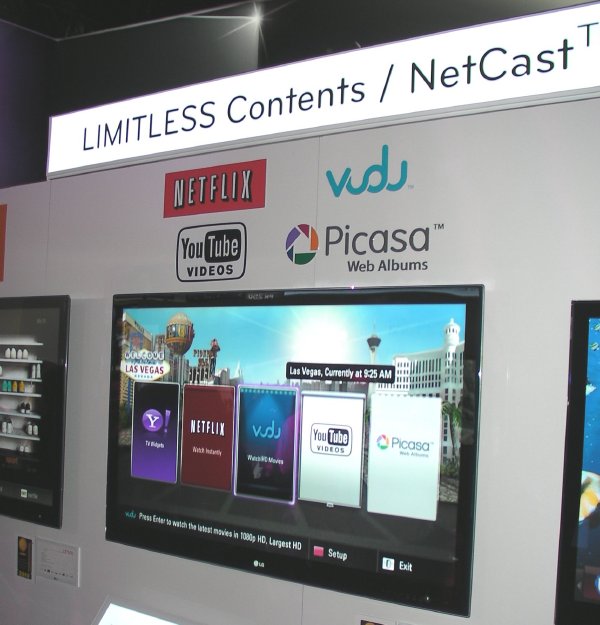
Icons and streamig and widgets – oh my!
NeTVs also pose a competitive threat to the cable TV industry’s tru2way initiative. tru2way is an embedded interactive cable tuner system that will replace CableCARDs. Sounds good, but there’s a little problem: It is based on the traditional cable TV channel model, which is likely on the way out as consumers increasingly will move to broadband video delivery and dump expensive channel tier packages.
On another front, network connections in Blu-ray players will turn out to be the salvation of that format. As I have mentioned before, BD players in Japan are full-blown media hubs, with internal hard drives, BD-RE capability, and coaxial and Ethernet connections. That’s the sort of product that will interest American consumers more than a simple BD player.
Don’t believe me? Look at how many new BD players have WiFi connections and support streaming. LG’s new BD-950 player takes the right approach as it contains a 250GB DVR and Wireless-N connectivity. Assuming the DRM lobbyists and Hollywood lawyers don’t have collective heart attacks; look for more BD player announcements like this during 2010.
The new kids on the block: You only had to glance at the size of the Haier, TCL, and Hisense booths at CES to see that the balance of power in TV manufacturing is changing drastically. These guys had everything the Koreans and Japanese did – Blu-ray players, WiFi connections, NeTVs, 3D demonstrations, widgets, streaming, edge-lit LEDs, wireless HDMI. You name it; they had it on display.
Those reporters and analysts that took the time to visit Vizio’s ballroom suite at the Wynn also saw another impressive demo by a powerful “new kid,” with a full line of LED LCD TVs, a BD player, wireless products, accessories such as headphones with built-in LCD screens, and even prototype MH digital TV receivers.
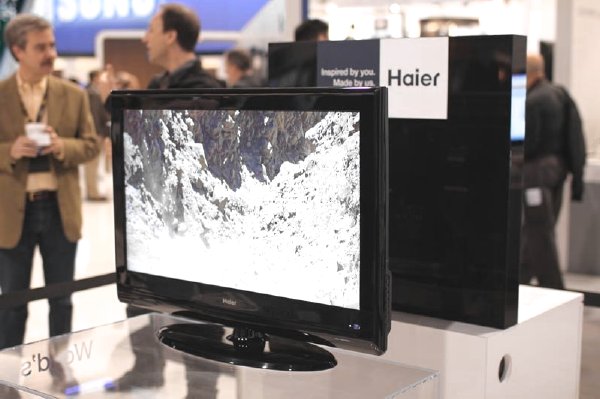
Look, Ma – no cables!
Even so, Haier one-upped everyone by demonstrating a completely wireless LCD TV in their booth. Based on WiTricity technology developed at MIT, this small LCD TV coupled about 100 watts of energy from a nearby RF-style emitter. Is it ready for the marketplace yet? No, but the idea that someday all connections to a large TV could be wireless is intriguing.
Significantly, this demo wasn’t in Sony’s booth, nor Samsung, nor Panasonic, nor LG. It was in a Chinese TV manufacturer’s booth, and that says a lot. Look for all three companies to significantly boost awareness of their product lines in 2010, and sign deals to sell direct through major brick-and-mortar stores.
Handheld convergence: The days when everyone has a “smart” phone like Apple’s iPhone or Google’s Android are fast closing in on us. These phones will do it all – voice, text, PDA functions, GPS, shoot video and photos, and maybe even receive digital TV through the new MH standard.
A Google rep at the Pepcom Digital Experience show told me that “universal” Android phones (combo GSM and CDMA models) aren’t exactly around the corner. But they’re coming later this year for Verizon customers who can’t use their phones overseas, and for AT&T; customers who can’t use their phones at all in many places.
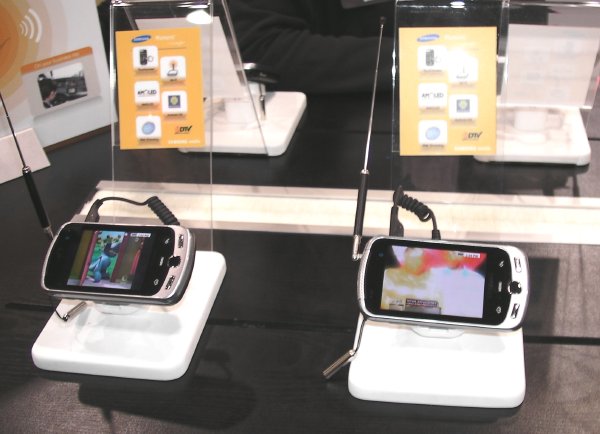
Portable TVs for the 21st Century.
Question: If these phones eventually reach 10 megapixels imaging capability and can also shoot HD video, does the market for stand-alone pocket cameras go away? Pocket video cameras are already a big threat to still cameras – this will just make it worse…
OLEDs: Will they EVER come to market? Seriously, we’ve been seeing OLEDs for years at CES, but you can count the number of OLED-equipped CE products currently offered for sale on the fingers of one hand.
That may change in 2010, as LG Display is poised to rollout commercial 15-inch AM OLED displays into North America and Europe. My feeling is that they would work perfectly with Netbooks and even eBook readers. (Indeed, there is an OLED-based eBook product in the works!). Netbooks are going to repace laptops eventually but would still have a three to four-year life cycle, so they seem to be a natural fit with OLED displays.
They’ll be here any day now…any day…any day…
In the meantime, we’ll se the odd OLED screen here and there, such as in the Aiptek PenCam Trio I wrote about in part II of my CES coverage. Smaller OLED screens are just easier to manufacture right now, and probably more cost-effective for camcorders and digital cameras.
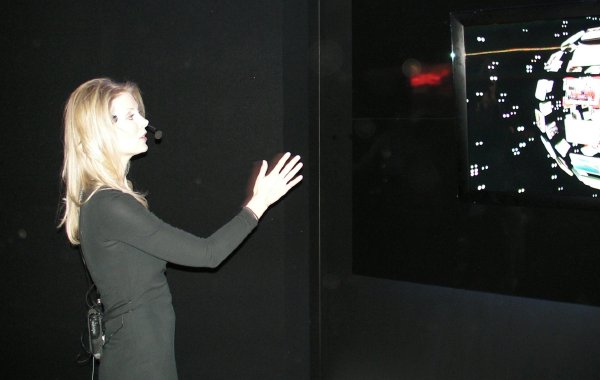
Smart TVs: We’re getting closer to the day when the only universal remote control you’ll need will be your hands. (Or your voice. Or maybe both!) Toshiba’s Cell TV demonstration showed that day isn’t far off, and past CES shows have also featured gesture recognition control by JVC and Hitachi.
Will we see a gesture-recognition TV this year? I believe we will, although it will cost plenty to get to market. But there will surely be early adopters who will pay any price to out one of these in their homes. And Toshiba could use the increased PR boost such a product would create for them, particularly in a cluttered LCD TV marketplace.
It sure beats the Clapper.