


HDTV Expert - The Wacky World of OLEDs
A classic line from vaudeville was Dying is easy; comedy is hard. Compared to bringing large OLED displays into the mainstream, it now seems that comedy is a piece of cake.
If we ever get large OLEDs right that is, if we learn how to print the front plane; use IGZO or graphene or carbon nanotubes for the backplane; develop flexible, reliable, and inexpensive moisture and oxygen barriers; and fabricate reliable displays via roll-to-roll processing with high manufacturing yield there will no longer be much reason to bother with either LCDs or plasma display panels. That goal continues to inspire investment, but it also continues to be very, very elusive.
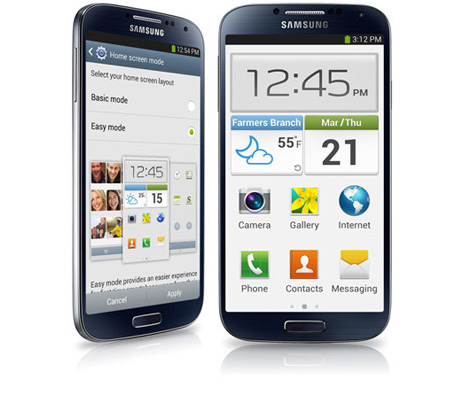
On the other hand, through excellent science and engineering, patience, and hard work, Samsung has made small OLEDs for cell phones a significant success. When we look at the absolutely beautiful OLED display in Samsungs Galaxy S4, there is a great temptation to say, Now all we have to do is make it a little bit bigger. But that way, scaly (or, at least, scale-up) monsters lie.
There has been a flood of reports and announcements about OLED technologies and products over the last week. Some are comedic. Some are surprising. Some may even be accurate. Lets sample.
 As has been widely and appropriately reported, our friend Ray Soneira who has been something of an OLED apostate did an exhaustive analysis of the OLED display in the Samsung S4 and gave it a rave review. Ray says the Full HD, 440 ppi, 5-inch display in the S4 is far superior to the one in the now two- (or maybe three-) generation-old Galaxy Nexus.

AMOLED Panel Shipments by Size (Source: Displaybank)
Displaybank issued the Q4 12 edition of its OLED Displays Market Tracker, which reports that in Q4 12, 65.1% of OLED displays sold were between 4 and 5 inches on the diagonal, and that 22.8% were 5 inches or more. That leaves only 11.6% at less than 4 inches. Thats a significant change from Q4 11, when, Displaybank reports, 59.9% were 4.x-inch, 45.2% were 3.x-inch, and only 4.4% were 5.x-inch.
Okay. The point has been made: OLED displays for cell phones are real products with a real market and real profits. But things get wackier when we get to large displays for TV. At CES, both LG and Samsung showed curved 55-inch OLED-TVs, asserting that having the screen curve around the viewer would provide a more immersive, even IMAX-like, experience. That assertion remains to be proved, and many observers chalked up the curved OLED-TVs to the need to keep the buzz going while panel-makers figured out a way to produce flat OLED dsiplays with reasonable manufacturing yields and less-than-stratospheric prices. So, it was something of a surprise when LG announced it will soon launch the curved sets in Korea at a price in excess of $13,000. Pre-orders are being taken at over a thousand Korean retail locations.
Meanwhile, production of flat 55-inch OLED-TVs totals in the low 3 figures.
With the great OLED hope for large-screen TV stalled, TV manufacturers are looking to 4Kx2K LCD-TV to bring buyers into the showrooms. Ultra-HD LCD-TV also started out at stratospheric prices, but the very mature LCD panel industry has the the technology and manufacturing depth to bring those prices down much faster than many of us anticipated.
OLED TV isnt dead. Its just harder than comedy.