The following article originally appeared in HDTVetc magazine in their August 2004 issue. It contains product information that is likewise, dated to mid-2004. The products in this article were "New" when originally published and should obviously not be considered as such when reading today. Although this article has some historical value, the primary value is the analysis to reach a forecasted vision of future market conditions (which eventually came to pass). This assisted many consumers in making more informed purchasing decisions. Reading the Analysis and Conclusions section is almost like time-travel: The historic vision has now transformed itself into current events and conditions ... mostly (we are still waiting for some of them to happen). Enjoy the reading.
How do you know what HDTV products are aligned for future release to make an informed selection today? Similar to when you are about to spend $3000 on any other product for your house. How do you know if your selection would not to be replaced next month by a product introduced on trade shows? Last year shows. Would you expect to see near future products at your corner store when the retailer is actually trying to sell the current line and liquidating the line before that?
Often, not even the store manager could be informed enough to help you with those questions, and the information is most probably limited to only the lines the store sells, and not looking ahead far enough so your purchase would not to be obsolete the minute it arrives to your door step. Some sales personnel would not even bother to read basic video subscriptions, or to consult free information of the Internet, to serve you better. Therefore, you are in your own to been able to anticipate, what to do?
Consumer electronics is always very dynamic. I have seen some manufacturers release self-replacing HDTV lines three times within the year, sometimes with minor improvements, other times with radical redesigns to include features you might have interest to wait for, if you knew they were coming next quarter.
The International Consumers Electronic Show (CES) held every January at Las Vegas is considered as one of the most important yearly consumer electronic events, if not the most. Manufacturers have the opportunity to show their new products, prototypes, mockups, and to provide technology statements. Many of those products would become available later on the year, or the following, some will later be released with different features or functionality than when shown, some will never make it to the retailing floors.
Every year I prepare a comprehensive review of future H/DTV products a month after CES; approximately 100 pages of documentation containing hundreds of new products with detailed specifications and company/technology trends. If you need that kind of detail, the complete version could help you and is available in the Internet's HDTV Magazine,
http://www.hdtvmagazine.com/store/ces-2005.php. The material also serves as backbone for the printable summary version that appears on the pages of this magazine (HDTVetc) as "The Current State of HD Technology" (Spring 2004 issue for CES 2004).
CEDIA EXPO (Custom Electronic Design and Installation Association) is another show usually held in September that manufacturers also use as an opportunity to show new products that are coming down the line, those products might be found displayed again four months later at CES.
CES International has grown from 200 exhibitors/17,500 attendees in 1967 to 2,500 exhibitors/129,000 attendees in 2004, and is now over six times the size of CEDIA EXPO (with over 20,000 attendees in 2003).
In other words, people attending CES might expect to see "all" of the products that will be introduced in the near future. Some attendees come back from the show and start saving for their targeted product, or decide to buy another one that is already available because CES helped them confirm that it might not be worth the waiting. However, those that follow the industry closely might already know that many major companies introduce full lines of new products after the first quarter, products that were not even hinted at CEDIA or CES. By incorporating to the CES review those "during the year" announcements, one can be in a better position to compare the products introduced by company A at CES in January, against products introduced by company B a few months later after CES (due to company's marketing yearly cycles), and have then a more complete view of the 2004/5 lines.
This article covers the new introductions/updates made between January and August (after CES, but before CEDIA) from several major DTV manufacturers such as Hitachi, Mitsubishi, Thomson, Toshiba, Samsung, and Sony. Prices are MSRP (I took the liberty to round the 999s to the next dollar to facilitate reading). Product availability is stated as "Time to Market" (TTM), reported in press releases by the manufacturer.
I hope the information would be useful for your buying/upgrade/planning decisions. To help you put all this information in perspective I also include a brief analysis and conclusions section at the end.
I would like to remind you that although some of the following products are still current, the announcements are not.
Hitachi
New York, June 04
Hitachi is concentrating its DTV efforts in LCD (RPTV and direct-view) and CRT RPTV for 2004/5 models, which includes the new "CineForm" design series of fully integrated/CableCARD sets, expected by year-end. The company has switched from 3 to 21 integrated models transitioning to CableCARD tuner integration, using Hitachi's VirtualHD 1080p upconversion video processing on all models.
Eleven new Ultravision CineForm models (below)
All integrated with ATSC/QAM CableCARD/dual NTSC tuners, Virtual HD 1080p video processor, identical vertical/horizontal look within the line, reduced height, two stage light engine, new dual-focus, advertising to start in Sep 04
LCD RPTVs Integrated
Ultravision VS810 Series
For open distribution, two HDMI/HDCP, 40 watt speaker system
50" 50VS810 $4000, TTM 3Q04
60" 60VS810 $4700, TTM 3Q04
70" 70VS810 $7000, TTM 4Q04
Ultravision Director's VX915 Series
For A/V retail stores, adds to above dual two-way 1394/DTCP, high-gloss cabinet w/black trim, deep-black anti-reflective shield, learning A/V Net III remote, TTM 4Q04
50" 50VX915 $4700
60" 60VX915 $5500
70" 70VX915 $7500
LCD Flat-panel TV Direct-view
32" 32HDL51 $TBA, TTM 4Q04, 768p, two IEEE-1394, two HDMI
Plasma Panels
Ultravision HDT51 Series Integrated
TTM 3Q04, CineForm cosmetics, dual HDMI, dual 1394, Quick Start Seamless ATSC/NTSC/QAM CableCARD tuners, Virtual HD 1080p processing, USB, inputs/outputs housed on Hitachi's AV Center connected via single wire to panel and controlled with IR from screen for hide away installations
42" 42HDT51 $6000, 1024x1024, AliS technology
55" 55HDT51 $10000, WXGA 1366x768
Ultravision HDX61 Director's Series Integrated
Same features as HDT51 line plus enhanced industrial design w/high gloss, black trim, high-contrast deep black shield, two year warranty, TTM 3Q04
42" 42HDX61 $7000
55" 55HDX61 $11000
Non-CineForm LCD Integrated RPTV
Fully integrated ATSC/QAM digital CableCARD tuning capability, TTM 3Q04
V710 (entry) Line
720p, Virtual HD 1080p processing, HDMI, USB, 40watt 3-way speaker system
42" 47V710 $2800
50" 50V710 $3300
60" 60V710 $4000
V715 (step-up) Line
Titanium silver finish
50" 50V715 $3300
60" 60V715 $4000
Plasma EDTV Monitor
42" 42EDT41 $4300, Virtual HD 1080p processing, 480p, DVI/HDCP, NTSC tuner, DVI/HDCP, TTM 2Q04
Plasma Professional Panel
42" CMP420V $3500, DVI, 853x480, V1 black frame version, V2 silver frame
CRT RPTVs
Series F510 Monitor Line
TTM 3Q04, HDMI, Virtual HD 1080p processing, 1080i/540p
46" 46F510 $1500
51" 51F510 $1700
57" 57F510 $2000
Series F710 Integrated
TTM 3Q04, adds to above integrated w/ATSC and QAM CableCARD tuners
65" 65F710 $3000
Series S715 Ultravision Integrated Line
TTM 3Q04, adds to above five element lens system, USB, 40 watt speaker system
51" 51S715 $2200
57" 57S715 $2500
LCD FPTV Ultra-vision
PJTX100 $4000, TTM 2Q04, 16:9 LCD for screen sizes between 30" and 300", 1200 ANSI, 1200:1 CR, 1280X720, 1.6:1 zoom, horizontal/vertical lens shift, DVI/HDCP
April 2004
The company announced the addition of six DLP high-definition sets between 52" and 62" to be available in the period Jul-Sep 04, and one 82" integrated LCoS micro display (Alpha's flagship RPTV). The sets are integrated with ATSC/QAM CableCARD unidirectional tuners, and have HDMI, and IEEE-1394 digital connections. These features are also included on most of the other newer sets of the 2004/5 line. In total, the company is adding 18 new integrated ATSC/cable-ready models.
According to the product development director, Mitsubishi designed a proprietary light engine using the 0.85-inch DMD chip on their new DLP additions, a return from their original 65" DLP introduction in 2000 (MSRP $15,000 at that time), the company said. Diamond models will be distributed by A/V specialists, Medallion models by major accounts.
525 DLP Series Integrated
TTM Jul/Aug 04, NetCommand 4.0 networking with Learning Media Command, "AMVP2" motion video processing
52" WD-52525 $4200
62" WD-62525 $5000
Medallion 725 DLP Series Integrated
TTM Aug/Sep 04, same as 525 features plus TV Guide Onscreen IPG, Anti-Glare Diamond Shield
52" WD-52725 $4500
62" WD-62725 $5300
Diamond 825 DLP Series Integrated
TTM Aug 04, 120GB HDD DVR for 12 hours HD, 72 hours SD, MPEG SD encoder, Gemstar guide, subscription free
52" WD-52825 $5500
62" WD-62825 $6300
LCoS RPTV
82" Alpha 925 $21000, TTM Oct 04, 1920x1080 pixels resolution, 120GB DVR for 12 hours HD, 72 hours SD, MPEG SD encoder, diffusion screen, two-way speakers, this new unit has now an internal DVR, but still costing $21000 as last year's model Alpha WL-82913
New Lines (five models) of LCD Flat-panel TVs
40 Series
1280x768, PC compatibility, upgradeable, AMVP
22" LT-2240 $3000, TTM Jun 04
30" LT-3040 $5000, TTM Apr 04
Medallion LCD Flat-panel Monitor
1280x768, TTM May 04, black bezel cosmetics, Color View picture control
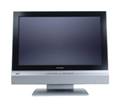
30" LT-3050 $5300
Diamond Series LCD Integrated TVs
ATSC/NTSC/QAM CableCARD tuners, IEEE-1394, HDMI/HDCP, 120GB HDD DVR for 12 hours HD, 72 hours SD, TV Guide Onscreen IPG, MPEG SD encoders, Net Command 4.0
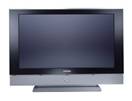
42" LT-4260 $14000, 768x1365, TTM Oct 04, uses 20 fluorescent lamps
55" LT-5560 $TBA, 1080x1920, TTM TBA, uses 28 fluorescent lamps
Plasmas Medallion Series TTM Oct 04
42" PD-4245 $5000, 480x852 EDTV, MonitorLink DVI, speakers, stand
50" PD-5050 $8500, 768x1365 HD monitor, HDMI
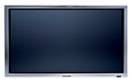
61" PD-6150 $18000, 768x1365 HD monitor, HDMI, improved brightness and contrast
CRT RPTVs
315 Series, upgradeable monitors, DVI/HDCP
42" WT-42315 $1600, TTM Apr 04
48" WS-48315 $1800, TTM May 04
55" WS-55315 $2200, TTM Mar 04
65" WS-65351 $2700, TTM Apr 04
Eight CRT RPTV Fully Integrated Models
ATSC/QAM CableCARD tuners, AMVP2 processing, IEEE-1394, Net-Command 4.0 system control, HDMI/HDCP
515 Series
48" WS-48515 $2300, TTM Jul 04
55" WS-55515 $2700, TTM Jul 04
65" WS-65515 $3200, TTM Apr 04
Medallion 615 Series, TTM Aug 04
55" WS-55615 $3000
65" WS-65615 $3500
73" WS-73615 $5300
Diamond 815 Series, TTM Aug 04

55" WS-55815 $4500
65" WS-65815 $5500, 9-inch CRTs
New HDTV Receiver/Controller
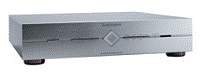
HD-6000 TTM later 04 at selected retailers, HD 120GB PVR (personal video recorder), up to 12 hours of HD recording, and 72 hours of non-HD, subcription free, MPEG SD encoder, AMVP2(TM) Mitsubishi's second-generation Advanced Multimedia Video Processor.
ATSC/QAM CableCARD/NTSC tuners, NetCommand(R) 4.0 system control, PerfectColor(TM) 6-way color adjustment, TV Guide On Screen(R) electronic program guide, seven inputs including one HDMI, and three component video inputs. Outputs include one HDMI, and one component video. Two FireWire(R) (IEEE 1394) digital home-networking ports.
New York, June 2004
At CES 2004 Samsung informally projected that in July 2004 they would make available to the consumer a 1080p DLP RPTV line implementing TI's new xHD3 Digital Micromirror Device (DMD), followed by a 1080p DLP FPTV in November. The line for 1080P RPTV was said to include sizes of 50", 56", and 61", at a projected range of $4000 to $6000. In June, the company formally confirmed the initial release of the 1080p RPTV line for later this fall to be made available to select A/V retailers, using a new design of their light engine (fifth-generation).
97 Series Line
61" HL-P6197W $6500, TTM Nov 04, 3000:1 CR, seven-segment color wheel, integrated ATSC/QAM unidirectional CableCARD tuners, to be distributed through select A/V retailers. The $6000 projected MSRP upper range (for the larger set), provided in January at CES, was close to June's confirmation.
In June's announcement no confirmation was issued about the release of the other smaller screens of the line, however, in September, just after this article was prepared, Samsung announced that they would show at CEDIA (September 04) the 56-inch model of this xHD3 1080p line:
56" HL-P5697W MSRP expected to be between $5500/$6000, TTM 1Q05, 3000:1 CR, pedestal base design, integrated with ATSC/NTSC/QAM Cable CARD tuners.
Samsung announced the release of nine fully integrated/CableCARD-ready rear-projection HDTV sets, six transitioned as HDTV monitors, three integrated models expected for release between September and November. Other DLP models will be transitioned to become integrated w/CableCARD to comply with the FCC mandate with the objective of eventually discontinue the manufacturing of HD DLP monitors.
Integrated CableCARD models transitioning from monitor versions will be identified with a number 7 on the last digit of the model number (instead of the 3 of the monitor version), the new 56" HL-P5663W DLP RPTV monitor expected for July will transition to HL-P5667W as the CableCARD integrated version, within a year time-frame. At CES 2004, the company anticipated that integrated versions would be priced $500 above the monitor versions below, expected for later in 2004.
63 Series DLP Monitors
Will be distributed by national accounts, TTM Jun/Jul 04, 0.55" HD3 DMD chip with third-generation light engine, 1500:1 CR, improved brightness over 2003's HD2 models, one DVI and one HDMI inputs, two component video inputs,
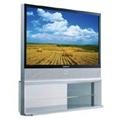
46" HL-P4663W $3300
50" HL-P5063W $3700
56" HL-P5663W $4200
61" HL-P6163W $4700
The 56" is for regional accounts, but will also be available to national accounts by special order only
70 Series DLP Monitors
Will be distributed by the PRO group and select A/V specialty retailers, 0.85" HD2+ DMD chip with fourth-generation light engine, claimed to have increased switching speed, reduced pivot point and higher reflective surface area for improved contrast (2500:1 CR) and brightness, improved optics and screen designs
46" $4000
56" $4500
Monitor Pedestal DLP Models
TTM Jul 04, HD2+ DMD chip, fourth-generation light engine, HDMI, DVI, PC inputs, component video inputs
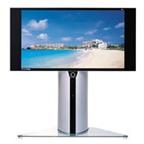
50" HL-P5085W $4300, distribution by national accounts
56" HL-P5685W $5000, distribution by regional accounts
CRT RPTVs Monitors
TTM Apr 04, HDMI/HDCP, two component inputs
42" HC-P4252W $1200, tabletop
47" HC-P4752W $1300, tabletop
52" HC-P5252W $1500, floor-standing
At CES 2004, Samsung announced that it would drop the 55" and 65" CRT RPTV monitor sets to focus on micro-display technologies, and is actually happening. The company also indicated that it plans to transition the above CRT RPTV monitors to fully integrated CableCARD sets later in the year, a difficult endeavor when adding a relatively expensive HD tuner to the low cost of CRT models, according to Samsung. One integrated (transitioned) model mentioned at CES was:
52" HC-P5256W $2,200, TTM later 04, integrated w/ATSC/QAM CableCARD, DNIe, HDMI (note the difference of $700 of the MSRP of 52" monitor vs. the estimated integrated at CES time; hopefully the difference "might" be lower at actual release time)
CRT Direct-view Integrated Models (eight)
Built-in ATSC tuners in four screen sizes, in-the-clear QAM digital cable tuner (omit CableCARD), DynaFlat picture tube, DVI/HDCP, accept 1080i/720p to display as native 1080i
30" in 16x9 AR, three models priced between $1000-$1200
26" in 16x9 AR, two models priced at $700 each
32" in 4x3 AR, two models at $1000 each
27" in 4x3 AR, $700
LCD Flat Panel Monitors
46" LT-P468W $10,000, TTM Jul 04, 1080p (1080x1920), 12-milisecond response-time, 800:1 CR, 500 candelas brightness, the model was originally gross estimated at CES 2004 as $20,000.
There were no comments issued from the company representatives regarding the status of the 57" version anticipated at CES 2004 (57" LTP578W, $TBA, TTM Jun 04, 1080x1920, 1000:1 CR, 600 cd/m2, DNIe, HDMI, DVI), hopefully they are on track.
Reduction of price on HLN models:
In March 2004 Samsung announced a $500 reduction of prices on the earlier 2003 DLP rear-projection HDTV lineup, the 43" entry model HLN4365W is now $3200 MSRP, the 50" HLN5065W is now $3700 MSRP, and the 61" HLN617W is now $4700 MSRP.
Plasma Panels
At the time (August) this article was prepared, Samsung was expected to announce the future introduction of plasma panels at CEDIA (Sep 04), such as:
37" HP-P3761 monitor (dual NTSC tuners only), 1000:1 CR, 1000 cd/m2 brightness,
42" HP-P4261 monitor (dual NTSC tuners only), 900:1 CR, 1366x768, 1000 cd/m2 brightness
55" HP-P5581 integrated 55 inches with ATSC/QAM CableCARD tuners, 3000:1 CR, 1000 cd/m2 brightness, DVI/HDCP, MSRP TBA
February/June/August 2004
On February 2004, Sony introduced twelve HDTV integrated models with ATSC/NTSC/QAM CableCARD unidirectional tuners with HDMI/HDCP digital connectivity and two HD-STBs with DVR for QAM Cable CARD tuning. Of the twelve models, six are LCD Grand Wega RPTVs, four CRT Direct-View sets, and two CRT-based RPTV sets, as follows:
LCD Grand Wega Integrated RPTVs
Two new series (WF and XS) were added to the entry-level (WE) and high-end (XBR) Series, and two new models were added within the WE Series, TTM Sep 04, 16:9 AR, Sony LCD Optical Engine video processing
New models on the WE Series
42" KDF-42WE655 $2800
50" KDF-50WE655 $3000
New WF Series
55" KDF-55WF655 $3700
60" KDF-60WF655 $4000
New XS Series
55" KDF-55XS955 $4000
60" KDF-60XS955 $4400
Direct-View Integrated CRT Tubes
Trinitron Wega tubes, SuperFine Pitch CRT technology, Wega engine processing
34" KD-34XBR960 $2200, TTM Jun 04
34" KD-34SX955 $2000, TTM Aug 04
36" KD-36SX955 $1900, 4:3 AR, TTM Oct 04
30" KD-30SX955 $1400, 16:9 AR, TTM Aug 04
CRT-based RPTVs Integrated
TTM Sep 04, WEGA engine, Direct Digital, DRCM (Digital Reality Creation MultiFunction), Multi-Image Driver (MID-X) circuitry
51" KDP-51WS655 $2100
57" KDP-57WS655 $2400
Flat Panel Monitors
Large Scale Integrated (LSI) circuitry to improve response rates in LCD and contrast in plasma model
23" KLV-23M1 $2300, LCD TV, 1366x768
32" KLV-32M1 $4500, LCD TV, 1366x768
42" KE-42M1 $5000, TTM Jun 04, 480p EDTV
Hi-Scan Series FD Trinitron WEGA Monitors
Solid silver tone, rounded corner cabinetry, dual component inputs, HDMI/HDCP
27" KV-27HS420 $750
30" KV-30HS420 $1000
32" KV-32HS420 $1000, 4:3 AR
34" KV-34HS420 $N/A, 16:9 AR
36" KV-36HS420 $N/A
LCoS RPTV (Sony's SXRD Technology)
To pair their current QUALIA FPTV projector, Sony was expected to introduce an SXRD integrated RPTV soon. After this article was prepared, Sony actually unveiled such set at CEDIA (September 04). It is a 16:9 model KDS-70XBR100 within the XBR line (not the hi-end QUALIA line), native resolution of 1920x1080, 70 inches, NTSC/ATSC/QAM CableCARD tuners, 200-watt cooled lamp for 3000:1 CR, WEGA Engine System, HD component inputs, HDMI/HDCP, IEEE1394 (iLink), expected MSRP $10000, TTM early 05.
HD QAM Cable STBs
On Sony's press release of February 04, the company announced the future introduction (by fall 04) of two new Cable HD-STBs with DVR capabilities, featuring ATSC/NTSC/QAM CableCARD tuners implementing Sony Passage integrated decryption technology. The boxes were said to be suited with HDMI/HDCP, Gemstar integrated EPG, component output, flexible AR settings, DD 5.1 w/optical audio out, USB data ports, and memory stick for JPEG and MPEG1, as follows:
DHG-HDD100 $700, TTM fall 04, 120GB HDD, 120 hours SD, 12 hours HD
DHG-HDD200 $800, TTM fall 04, 250GB HDD, 200 hours SD, 25 hours HD
However, later, in August 04, Sony issued a different press release announcing the future introduction of other models, as follows:
DHG-HDD250 $800, TTM fall 04, 250GB HDD, 20 hours of HD recording
DHG-HDD500 $1000, TTM fall 04, 500GB HDD (two 250GB HDDs), 60 hours of HD
Although both units above (250 and 500) have similar tuning and connectivity features as the models previously announced in February (100 and 200), the new units were announced with different model numbers, prices, HDD capacity, and recording time.
Sony had not referred to the first models on the second press release of August to clarify if this new pair is a replacement or an addition to those; apparently, Sony has decided to replace the two original models (100 and 200) even before they were expected to appear in fall 04.
It is important to note that these HD-STBs have a connectivity limitation: they lack IEEE1394 Firewire ™ input/outputs. This means that a tuned/stored HD content would not be able to be output to a D-VHS recorder for HD tape archival, nor it could be part of digital networking of compressed HD video with other devices or displays.
Additionally, such limitation does not comply with a specification requiring 1394 digital connectivity on Cable HD-STBs established in the plug-and-play agreement made by the Cable and Consumer Electronics industry, and approved by the FCC. If you are interested in more details, this subject was covered on my article "HDTV Integrated Tuners and You" that appeared on the second issue of this magazine.
(Announced later on June 2004)
Plasma XS Series Integrated
Digital Cable Ready, third-generation WEGA engine image processing, TTM Aug 04
37" KDE-37XS955 $5500, 1024x1024
42" KDE-42XS955 $7000, 1024x1024
50" KDE-50XS955 $9000, 1366x768
Thomson
New York, May 2004
Thomson join venture with China's CTL (TTE) starting in July 04 will produce for the US market eleven fully integrated ATSC and Digital Cable Ready models with QAM CableCARD unidirectional (seven RCA Scenium DLP models, four RCA CRT RPTV models), with HDMI, and with component inputs. The new sets are said to recognize the Broadcast Flag. According to TTE, the company will become the largest company in the world for color TV products; selling 18 million sets annually (with a 22 million production capacity), representing 11% globally.
"Profile" Scenium DLP Integrated
Ultra-thin two new models, ATSC/QAM CableCARD tuners, TTM Sep 04, 6.85 inches deep and less than 103 pounds make them suitable for wall hanging, hanging bracket sold separately, dual IEEE-1394 two-way/DTCP, TV Guide Onscreen EPG and Internet browser, will detect broadcast flag, HD2 chip, HDMI/HDCP, dual component HD inputs
50" HD50THW263 $9000
61" HD61THW263 $10000
Thomson did not update/confirm the status of the future 70" DLP mural-sized set announced in January at CES (HD70THW263), expected for early 2005, hopefully they on track.
Other Scenium DLP Integrated
Five new sets, 16 inches cabinet depth, under 100 pounds, HDMI/HDCP, ATSC/QAM w/CableCARD/NTSC tuners, 160 degree viewing angle, component, HD2 chip, controls DVR functions of optional DVR2080
165 Series
IEEE-1394, Internet browser, TV Guide EPG, TTM fall 04
44" HD44LPW165 $3700
163 Series
IEEE-1394, Internet browser, TV Guide EPG, TTM Aug 04
50" HD50LPW163 $4000
61" HD61LPW163 $4600
162 Series
ATSC/QAM cable in-the-clear tuners, excludes: TV Guide EPG, Internet browser, and IEEE-1394 interface. TTM Jul 04
50" HD50LPW162 $3800
61" HD61LPW162 $4400
CRT RPTV Integrated
Four new sets w/ATSC and QAM cable tuners, HDMI/HDCP, component, TTM fall 04
52" HD52W55 $1900
52" HD52W56 $2000
58 group
Subwoofer output, protective screen shield, SRS Focus
52" HD52W58 $2300
56" HD56W58 $2500
Current 42 Series DLP Integrated (continues in the line up)
ATSC/QAM cable in-the-clear tuners, includes EPG, Internet browser, HDMI, and IEEE-1394
50" HD50LPW42 $3800
61" HD61LPW42 $4300
CRT RPTV Monitors (carried over)
DVI/HDCP
52" D52W15 $1500
52" D52W20 $1700
56" D56W20 $2000
61" D61W20 $2200
Plasma Flat Panels
Thomson discontinued the plasma line; their supplier (NEC) was acquired by Pioneer. Thomson will concentrate on DLP and LCD.
LCD TV
RCA Line Monitor
26" LCDX2620W $2600, TTM Jun 04, 1280x768, open distribution, DVI/HDCP, component, RGB, NTSC tuner, 600:1 CR, 500 cd/m2 brightness
RCA Scenium Line
NTSC tuning monitors, DVI/HDCP, component, RGB, 500:1 CR, 500 cd/m2 brightness, 170 degrees of vertical/horizontal viewing
27" LCDX2722W $2800, TTM Jun 04, 1280x720
32" LCDX3022W $3800, TTM Jul 04, 1280x768
Two new RCA Scenium HD DVRs
Interface w/new integrated TV sets via IEEE-1394 connections; recognize DTCP and Broadcast Flag
DVR2160 $550, 80 hours of SD, 18 hours of HD recording
DVR2080 $450, 40 hours of SD, 9 hours of HD recording
Toshiba
May 2004 (Austin Texas)
Toshiba announced its 2004-05 television line to dealers. The new line is mainly oriented to fixed-pixel digital display technologies, such as direct-view LCD TV, plasma, Digital Light Processing (DLP) rear-projection integrated sets and monitors, in addition to CRT-based rear-projection and direct-view products.
Additionally, Toshiba introduced an HD 160GB digital video recorder (Symbio 160HD4, $500) to connect via IEEE-1394 with their integrated sets. The programming circuitry is based in part on Gemstar's TV Guide Onscreen interactive program guide, and since is built within Toshiba's fully integrated HDTV sets it makes the Symbio compatible only with those sets.
In January 2004 (CES), Toshiba announced their decision of discontinuing the LCoS line, which is now replaced by their support to DLP. In May, Toshiba formally announced the addition of 10 RPTV DLP sets and monitors implementing the pairing of the HD2+ chip of Texas Instruments (0.8-inch Digital Micromirror Device - DMD) with the Toshiba Advanced Light Engine (TALEN). The company's two-year goal is to position their DLP products within the top-three DLP TV manufacturers, by using advance optics together with the HD2+ DMD chip, as opposed to the HD3 chip-based sets of the competition.
New models of fully integrated HDTV sets include ATSC/QAM tuners with CableCARD slots for unidirectional digital cable ready capability, and TV Guide Onscreen interactive program guides. Most sets also include both HDMI/HDCP and IEEE-1394/DTCP digital interfaces.
DLP RPTVs
HD2+ chip, Magic Square Algorithm for smooth color gradation, Dynamic Contrast Enhancer for higher contrast, color purity, and saturation, Super Real Transient and Small Signal Sharpness for sharp transitions from dark to light, Color Transient Improver and Color Detail Enhancer, flat-panel plasma displays type of look, silver cosmetics and thin cabinets, and under-screen glass component cabinets.
TheaterWide Series DLP RPTVs
Silver cabinets with a gray bezel
HM84 Tabletop Monitors
TTM Jul 04
46" 46HM84 $3000
52" 52HM84 $3500
62" 62HM84 $4000
HM94 Tabletop Integrated
ATSC/QAM CableCARD tuners, IEEE-1394, DTVLink, HDMI, TTM Sep 04
46" 46HM94 $3400
52" 52HM94 $3900
62" 62HM94 $4400
Cinema Series DLP RPTVs
Same as TheaterWide Series plus cabinetry with black bezel accents, virtual Dolby surround sound, 6-item A/V illuminated remote
HMX84 monitors
52" 52HMX84 $3800, TTM Aug 04
62" 62HMX84 $4300, TTM Sep 04
HMX94 Integrated
Two HDMI, TTM Oct 04
52" 52HMX94 $4200
62" 62HMX94 $4700
CRT RPTVs
Analog and 4:3 aspect ratio sets are now discontinued
TheaterWide Monitors
46" 46H84 $1400, Jun 04, tabletop
51" 51H84 $1700, May 04
57" 57H84 $1900, May 04
65" 65H84 $2200, Jun 04
TheaterWide Integrated
QAM CableCard/ATSC tuners, IEEE-1394, TV Guide On-screen interface
51" 51H94 $2100, Jul 04
57" 57H94 $2300, Sep 04
Cinema Series Integrated
QAM CableCard/ATSC tuners, IEEE-1394, TV Guide On-Screen interface
51" 51HX94 $2400, Aug 04
57" 57HX94 $2600, Sep 04
65" 65HX94 $2900, Oct 04
Flat-panel Displays
LCD Monitors
DVI or HDMI, Cable clear DNR+ video noise reduction circuitry
EDTV 4:3 LCD Monitors
500:1 CR, component input, 480x640
14" 14DL74 $500, Jun 04
20" 20DL74 $1000, Jun 04
TheaterWide 16:9 LCD Monitors
DVI/HDCP
23" 23HL84 $1800, Aug 04, 1280x768, 500:1 CR
23" 23HLV84 $2000, Aug 04, LCD TV/DVD combi-unit, 1280x768, 500:1 CR
26" 26HL84 $2500, Jun 04, 1366x768
32" 32HL84 $3500, May 04, 1366x768
TheaterWide Plasma Monitors
42" 42HP84 $5500, Sep 04, 1024x768
50" 50HP84 $TBD (estimated at $7500), Oct 04, 1024x768
Cinema Series Flat-panel Monitors
New double-baffle design
32" 32HLX84 $4000, Oct 04, LCD monitor, 1366x768, 800:1 CR
42" 42HPX84 $6000, Sep 04, plasma display monitor, 1024x768
Direct-view CRT Monitors
TheaterWide Line
HDMI
26" 26HF84 $700, Aug 04
30" 30HF84 $900, Jul 04
34" 34HF84 $1400, Jun 04
Cinema Series Line
30" 30HFX84 $1000, Aug 04
34" 34HFX84 $1600, Jul 04
Toshiba anticipates a demand for direct-view digital televisions and will keep producing complete lines of analog CRT direct-view models (curved and flat-faced).
DVD Recorders (I am adding this non-DTV information due to the HD upconversion feature of the last unit)
In regards to DVD recording, Toshiba announced several new products, single-deck, DVD/VHS, DVD/DVR, DVD/TiVo, and TiVo/DVR combined with DVD-RW/-R recording. TiVo units use the Series 2 platform with networking upgrade capability and free basic service, and come with 120GB ($600, Aug 04) and 160GB ($700, Aug 04) capacity. They are suited with a new Easy Navi menu system (simplifying the archiving of camcorder tapes to disc), and with IR blaster capability for automatic recording from separate connected components.
D-R3 $350, TTM Sep 04, single-deck DVD recorder w/DVD-RAM/-R
D-VR3 $500, TTM Jul 04, combination DVD-RAM/-RW/-R and VCR dual-deck recorder with bi-directional dubbing
One unit in particular features an interesting capability related to HD, is a DVD recorder with DVR and HD upconversion:
RDXS53 $700, TTM Oct 04, combination DVD-RAM/-R DVD recorder, 160GB hard drive recorder, TV Guide On-screen program guide, HDMI output, 720p/1080i upconversion over HDMI