
articles
A New Approach to Components in a Digital Audio/Video World
Originally published in October, 2006

Re-published courtesy of The RAF Home Theater
http://www.rfowkes.com/html/component_approach.html
Re-published courtesy of The RAF Home Theater
http://www.rfowkes.com/html/component_approach.html
Introduction Remember when Home Entertainment life was much simpler? All you did was to sit back and turn on the TV to watch programs. Or, if you remember TV before the days of remotes you turned on the TV and then sat back unless you had a young son who was your human remote. Carrying this one step further back (as this writer remembers) there was actually a time when you only listened to programs for your nightly entertainment. Fibber McGee and Molly anyone? In any event, in the 1950's to somewhere in the 1980's "Home Theater in a Box" was just that for most people - the family television. A handful of audiophiles (I was building kits in the early days) had stereos by the late 50's and we knew about audio components - a pre-amplifier, an amplifier and speakers which produced wonderful sounds from our sources - usually records and reel to reel tapes. (Yes, I also had a wire recorder for a time. I also have an Edison cylinder or two gathering dust.) But as interest in components grew so did the demand for a one box solution to audio as well - and the audio receiver was born. Nirvana for the "I don' need no steenkin' wires!" set! Fast forwarding a bit (through LPs, Audio Cassette Tapes, 8 Track Players, Cable TV, VCRs, PCs, CDs, Satellite TV, DVDs, SACDs, DVD-As and similar) we arrive at the present - a high definition, multi-channel audio video world filled with great sounds and images and the promise of things to come. And a tremendous amount of confusion! I would be remiss if I neglected to single out two significant things that occurred in the last quarter of the 20th century which, in my opinion, changed forever the landscape of home entertainment - video cassette recorders and the personal computer. VCRs made us aware that it would be possible (and cost effective) to build (or at least rent) a home movie collection without the limitations of a 35mm projector and bulky media. PCs (and all the associated fallout) provided the technology to produce an ever growing list of devices (displays, audio and video components) that were viable for millions of people. Yes, the introduction of DVDs might also be considered significant, but it was really a logical outgrowth of a slightly less efficient technology, Laserdiscs, and not as ground breaking in its impact as the VCR and the PC. It was, to this author, just the next step in the evolving world of home entertainment (not that I'm attempting to minimize the impact of DVDs which signaled the end of VCRs). By the end of the 20th century all heads were beginning to turn toward digital media and high definition. New standards were set, new products were introduced and by the end of 2005 it was clear that digital was replacing analog in many ways. In fact, before the first decade of the 21st century came to a close, it was proclaimed that the analog TV from the 1950's would be out of luck when the analog lights went out for broadcasting on February 17, 2009. So where are we at this point? Clearly (no pun intended) we have a better picture and better sound at our disposal but the myriad of options also leads to a lot of confusion as to what's the best way to proceed. As always, the choices will depend on individual needs. Some people will still be content with a one box solution - but with a better picture and, hopefully clearer sound. Lots of products out there (or on their way) will take care of that. Others will want to go a little further in the area of home entertainment and for them there is a wide assortment of A/V receivers, speakers and wonderful displays that will provide them with an experience that will completely satisfy them. One thing that CEDIA 2006 pointed out (with 720p front projectors breaking the $1000 price barrier and 3 chip 1080p front projectors offered under $5000 for the first time) is that a serious home theater is no longer limited to those with lots of discretionary funds. Clearly, home theaters are within the means of a very large number of budget conscious households if they choose to go that route, and with bigger screens and more media at their disposal this is a more and more obtainable goal. So what about the audio/videophile - those of us who tend to be on the cutting (some say bleeding) edge as far as Home Theater is concerned? Where are we heading and what are our options? It's my position that a possible course of action is to re-visit the component approach to audio and video - something that originally surfaced for audio in the 1950's but has all but disappeared for many people in the age of the mega-receiver. In this essay I intend to present some ideas to think about. These thoughts form the framework for my current (and future) plans for my home theater and might even explain a bit the revolving door nature of my components which seem to go from "current" to "other" to "former" at an alarming rate to some. Let's get started. The Early Days
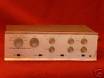 As previously mentioned, I got my first taste of audio components in the mid 50's when I built lots of electronic kits. My favorites were the ones from Dynaco. I assembled a PAS-3 pre-amplifier, an ST-70 Stereo tube amplifier and a Dynaco FM Tuner. I used an AR turntable and AR-2ax speakers and considered myself to have an excellent system for its day (and I saved considerable money by building it myself!).
 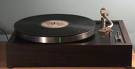 While the speakers are long gone, the other components are still functional to this day! By the 1960's audio receivers were emerging. One of the first units that I built was the Heathkit AR-15. It had great features and eliminated a lot of the wires associated with separate components. As the years passed (1960's, 1970's, 1980's) I upgraded my display several times (still called a "television"), added new speakers and went through several generations of receivers.
  By the 1990's the video sources had increased (TV, Cable, Betamax, VHS, LDs) to the point where the receivers were now called "A/V" receivers to reflect the handling of multiple video sources in addition to the audio ones (LPs - fading, CDs, Tapes, etc.) I also owned my first "serious" monitor by that time, a Pioneer Elite Pro-75 45" CRT rear projection monitor and was enjoying my early version of "home theater."
My Dedicated Home Theater By 1999 I began to seriously think of building a dedicated home theater for a number of reasons. For one thing there was going to be an addition added to my home and this was the logical time to consider such a project. For another, DVDs had saturated the market to such an extent that the price of media had dropped significantly. Finally, the realm of front projection (vital, in my opinion, for the full big-screen theatrical experience) had been opened to me once the introduction of digital projectors dropped below $10,000. I ended up with a Sony VPL-VW10HT for $5800. I also fitted the theater with M&K speakers (7 speakers and a subwoofer) and decided to purchase the current flagship Denon A/V Receiver, their Model 5700, as the control center for all my sources. It served me well (and is still being used upstairs.) When I got the upgraditis itch, the first modification I made was to add separate amps to the system. This is documented on my HT website and the short version is that separate amps sound better than those in a receiver and also make the pre/pro part of the receiver perform better. The next logical step was to replace the Denon receiver with a dedicated pre-pro (since I wasn't using its amps anyway and it could be used elsewhere). I had the opportunity to beta test the Outlaw 950 Pre/pro (pre-amp/audio processor in one box) and it fit perfectly into my plans and had more functionality. A few years later I fell in love with Logic 7 from Lexicon and upgraded my Outlaw 950 to a Lexicon MC-8 which handled a lot of my connection and processing needs a little better than the 950. Note that most of the uses of all these receivers and pre/pros were to handle the audio side of things with video switching thrown in almost as an afterthought. Any video processing was handled by my projector - first the Sony VPL-VW10HT (LCD), and then the Runco CL-710 (DLP), both of them 720p HD designs. Then along came 1080p, HDMI in all its flavors (and misconceptions) and an increased awareness of video processing (scaling, de-interlacing, etc.) Add to this the emphasis on HD sources (HDTV, HD DVD, and Blu-ray) and it was clear that video processing had moved out of the display devices and into the components (receivers, players, separates). To me, it was time to take stock of the situation and to develop a game plan. My "New" Approach "New" is actually a misnomer here since I am proposing that people consider going back to something that first evolved over 50 years ago. It is my belief that serious videophiles (people looking for the best bang for the buck while still striving for leading edge images and sound) consider taking a component approach to all of this - especially where video is concerned. This means building your system around a separate video processor instead of relying on the video processing attributes of the other boxes in your HT system (the players, the receiver and the display.) Video processors are not cheap by any means (the one I'm going to talk about, the DVDO iScan VP50, lists for almost $3000) but, ironically, buying a video processor can actually save you some money in the long run! Before you dismiss this as being a ridiculous statement please read on. Note: While I will be referring to DVDO processors because those are the products I'm most familiar with this doesn't mean that there aren't other comparable products out there from other manufacturers that can also fit the bill. My comments apply to most of these units and choice becomes a Mercedes/BMW type comparison in most cases. And what is the "new" component approach in an A/V world? When we were young (and before some of you were born) components in the audio sense meant:
- On the player side, look for HDMI 480i output for SD DVD players and HDMI 1080p output for HD-DVD and Blu-ray players.
- On the display side, look for native acceptance of the same resolution and format that the monitor displays (1080p input for 1080p displays, etc.)
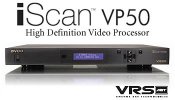
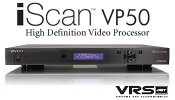
- A DVDO iScan VP50 (upgrade from my VP30 for its increased functionality - see the DVDO web site for further details.)
- A Denon 3806 A/V Receiver to be used as a Pre/Pro only
- A Denon 2930ci DVD Player
 That lets the VP50 (or any other quality video processor) deal with the native signal directly from the SD DVD and the results are spectacular. OPPO makes a very nice DVD player (the DV-970HD) with HDMI 480i output for around $150. If you think of the savings involved by not having to purchase a quality up scaling DVD player you can add these to the other cost effective measures already discussed you get a sense what I mean when I say that purchasing an external video processor can actually cost you less in the final analysis.
Remember, we're not talking about performance that is the same as a run-of-the-mill DVD up scaling player. We are talking about state of the art video performance. And What Will the Future Bring? Like I said, when you consider the big picture (pun intended this time) money invested in a quality external video processor can actually lead to a lower total cost once you assemble your dream audio/video system. It will probably even look better and it most assuredly will be much more flexible for future needs. There is a lot on the table with Digital Video, HD media of all types, HDMI 1.3 connections and beyond, new audio codecs, probably some video enhancements, and certainly some things that we haven't even considered at this time. While it isn't possible to cover all bases in the ever-evolving world of Home Theater a modular (component) approach at least gives you the flexibility to roll with the punch. (Le Chatelier's Principle, from my Chemistry days. You can look it up.)