Home Theater

R.I.P For Home Theater Projectors?

Falling flat-screen prices are quietly threatening home theater front projection's survival. With 85-inch Ultra HD displays now matching decade-old projector prices, and 8K panels from Samsung and LG arriving faster than anyone anticipated, the case for keeping a projector and screen grows harder to justify. Micro-LED advances in commercial cinemas hint at where home displays are heading next, and the trajectory points toward a future where projectors become nostalgic relics.

Pete Putman
Columns

Useful Gadgets (And They’re Smart, Too!): IO Gear Ultra Long Range Wireless HDMI Link And Amped Wireless Apollo PRO Long Range HD Web Cam

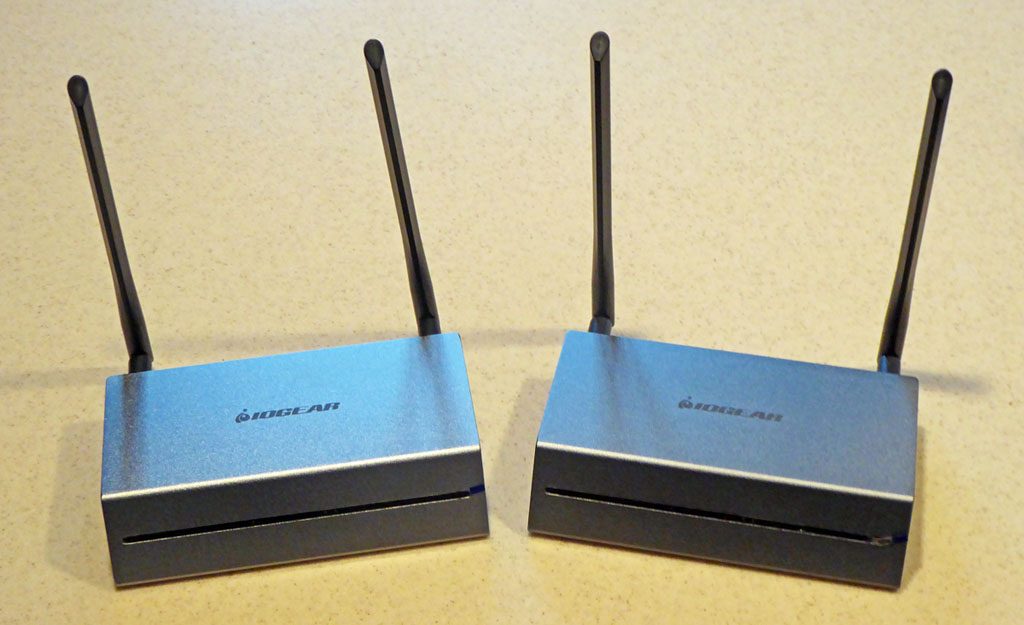
Wireless connectivity has transformed consumer electronics, and two products push that evolution further. IO Gear's Ultra Long Range Wireless HDMI Link streams Full HD video up to 600 feet using bonded 5 GHz WiFi channels, while Amped Wireless's Apollo PRO delivers 720p HD surveillance with motion-triggered cloud recording. Both auto-configure with minimal setup and pack limited AI smarts into capable hardware. Whether either justifies its premium price tag depends entirely on your installation demands.

Pete Putman
column

On LED Walls Versus Projectors and Who Ultimately Wins This Battle

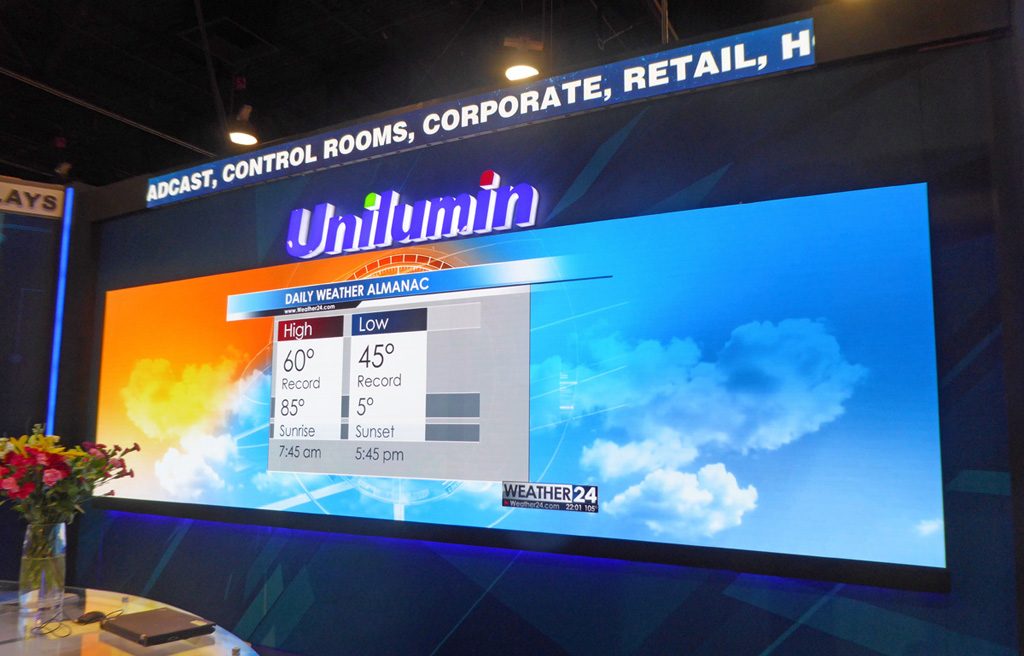
LED walls have quietly staged a takeover of live events, outdoor venues, and broadcast studios, pushing high-brightness projectors to the margins faster than most industry veterans anticipated. Fine-pitch tiles now deliver 4K resolution and staggering brightness levels that stacked projectors simply cannot match in practical deployments. Reliability concerns and the dominance of Chinese manufacturers navigating Western markets remain the last real obstacles standing between LED walls and total victory.

Pete Putman
Columns

LG Is “All In” With OLEDs (Updated)

LG Display has gone all-in on OLED technology, betting its future on a manufacturing gamble that could reshape the television industry. A rare visit to LG's Paju, Korea facilities reveals why: OLED's emissive pixel architecture delivers contrast, shadow detail, and off-axis performance that LCD simply cannot match. From paper-thin wallpaper displays to flexible automotive dashboards, the technology's potential extends far beyond living rooms - and the price curve may surprise you.

Ken Werner
Columns

A New QLED Artifact

A visit to LG Display's Paju facility revealed a striking artifact in Samsung's Q Series QLED televisions - one previously unknown to seasoned display analysts. Edge-lit LCD panels using one-dimensional local area dimming produce a visible 'searchlight beam' or halation effect whenever bright objects share a dimming zone with darker surroundings. Full-array backlights could eliminate the problem, but marketing pressures favoring ultra-thin designs keep that solution off the table for now.

Ken Werner
Columns

High Dynamic Range: It’s Here!

High dynamic range imaging has arrived, and it is reshaping how displays reproduce light, shadow, and color. HDR expands tonal capture from roughly 11 f-stops to 22, pushing peak brightness into the thousands of cd/m2 while wide color gamut unlocks over one billion color shades. Prices are falling fast, HDMI and DisplayPort standards are scrambling to keep pace, and industries from medical imaging to military simulation are already taking notice.

Pete Putman
Columns

Three Premium 2017 LCD-TVs Plot Different Paths to Enhanced Performance

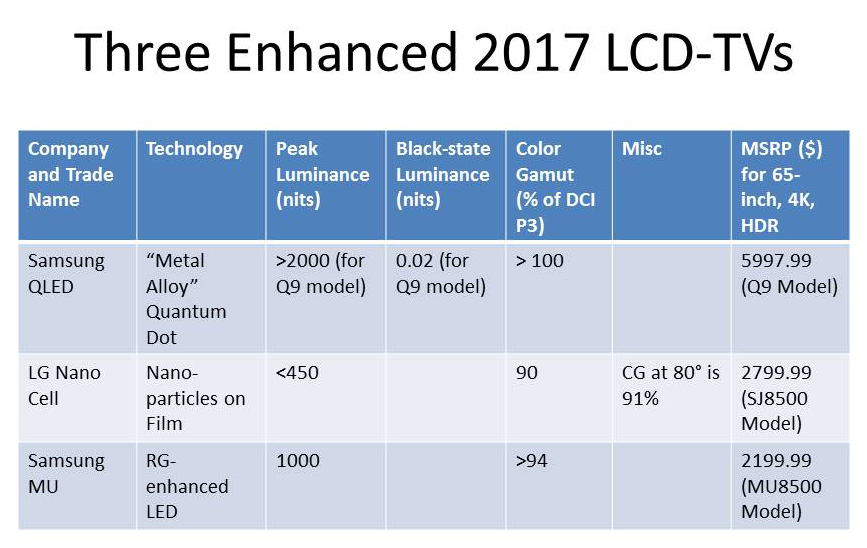
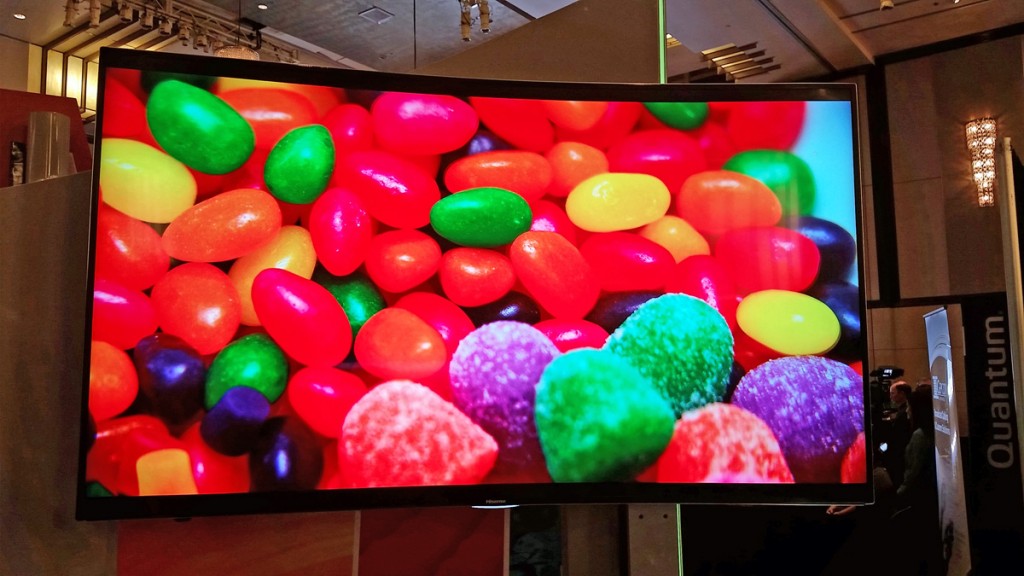
White LEDs in conventional LCD backlights fall short on green and red purity - a problem three premium 2017 sets attack in strikingly different ways. Samsung's QLED Q Series deploys redesigned quantum dots for peak luminance exceeding 2000 nits, LG bets on Nano Cell film technology for wider viewing angles, and Samsung's MU series uses red-green phosphor LEDs at a more accessible price point. Which approach wins the long game against OLED remains an open question.

Ken Werner
Columns

There’s More To The Story (There Always Is!)

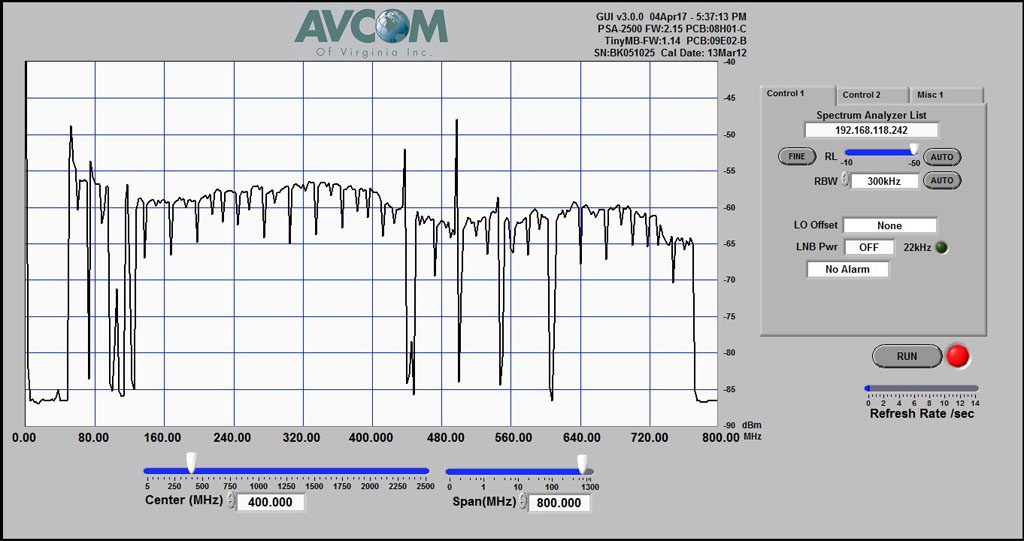
Chasing a maddening WAN dropout problem through spectrum analyzers, faulty ground blocks, and noisy neighbor cable drops reveals how a single cheap component can destabilize an entire cable system. Comcast's Special Operations team ultimately confirmed what the test equipment suggested: intermittent connections create standing waves that tilt QAM carriers and corrupt upstream channels. The full diagnostic breakdown, including RF measurements and fix details, surfaces at InfoComm in June.

Pete Putman
Columns

Now You See It…Now You Don’t

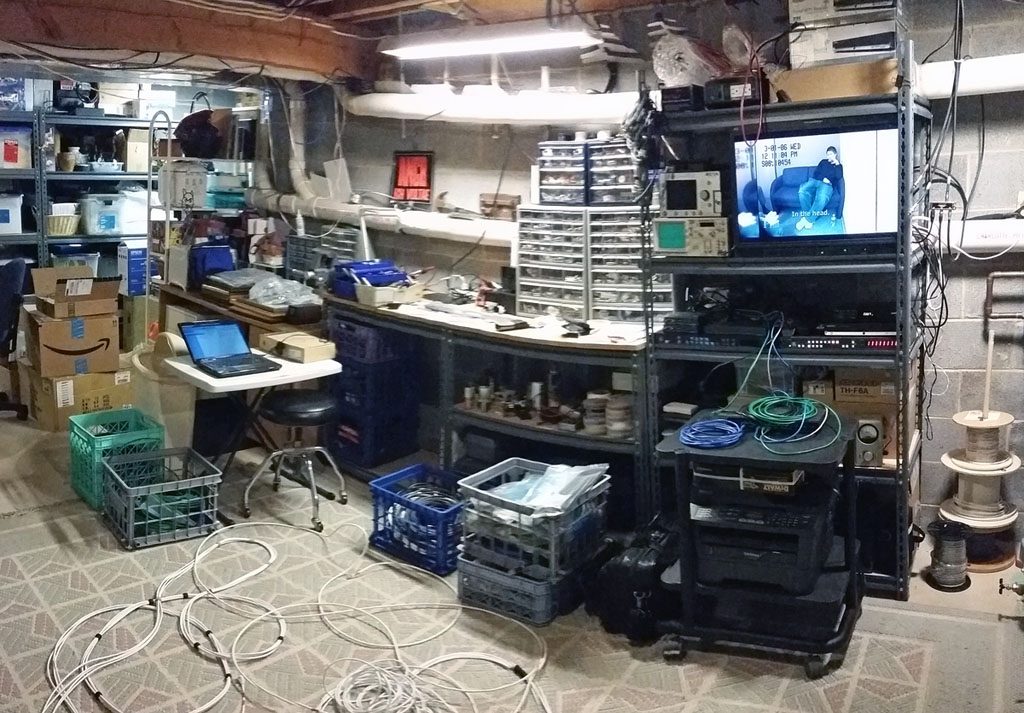
Intermittent Internet dropouts plagued one home theater installer for months despite modem swaps, new coaxial runs, and shielded Cat 6 cables. A spectrum analyzer finally exposed the real culprit: a Comcast X1 set-top box blasting broadband RF interference every two seconds, coupling noise back through its own RF input and killing upstream modem signals. Swapping the offending Samsung-built unit for a compact replacement restored clean service instantly. The full diagnostic story holds lessons every cable subscriber should hear.

Pete Putman
Columns

On Samsung , Pro AV, Car Audio, and Control

Samsung's $8 billion acquisition of Harman International signals far more than a play for car audio dominance. Chinese rivals like TCL and Hisense are squeezing TV margins, the Galaxy Note 7 disaster cost billions, and smartphones have plateaued. Samsung gains automotive display technology, digital signage muscle, and IoT infrastructure - but its appetite for traditional AV control systems may be far smaller than the pro AV community hopes. The real story behind this deal reveals where the entire industry is heading.

Pete Putman
column

Everything Old Is New Again: Goodbye To The VCR

Funai Corporation quietly ended VCR production in 2016, closing a chapter on a format that quietly rewired how America watches television. From time-shifting and commercial-skipping to rental stores, DVDs, DVRs, and today's streaming giants, every modern viewing habit traces its DNA back to that first VHS deck sold forty years ago. The full evolutionary arc - and where it points next - reveals just how circular technological progress can be.

Pete Putman
Columns

On CE Week, Shoot-Outs, And Flies In The Ointment

CE Week's annual Value Electronics UHDTV Shoot-Out crowned LG's OLED65G6P the 2016 King of TV - but a persistent greenish color cast visible at roughly 35 degrees off-axis raises serious questions about the judging. Neither LG representatives nor the expert calibrator panel appeared to catch it. HDR and wide color gamut genuinely impress, yet one nagging optical anomaly in this year's winner deserves a much closer look.

Pete Putman
column

AV-over-IP: It’s Here. Time To Get On Board!

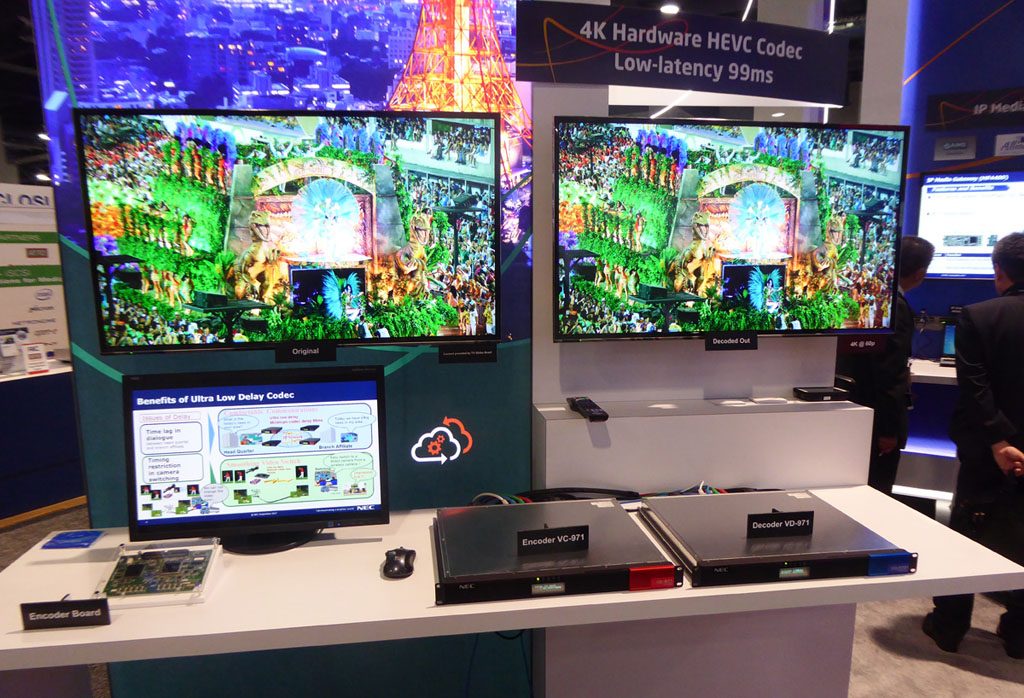
Legacy HDMI switching matrices are expensive, bandwidth-capped, and already obsolete. As the broadcast, telecom, and streaming worlds complete their migration to IP infrastructures, the commercial AV industry keeps clinging to proprietary display interfaces and Band-Aid extensions. Standard codecs, off-the-shelf network switches, and optical fiber offer a faster, more scalable, and genuinely future-proof alternative. Whether the industry embraces the shift willingly or gets dragged along, one thing is certain: AV-over-IP is coming for everything.

Pete Putman
column

2016 – A Turning Point For Television

Ultra HD is reshaping the television market at a breathtaking pace. Four years after astronomically priced 4K sets first arrived, consumers can now buy a 55-inch smart UHD display for under $800. HDR, wider color gamuts, 10-bit panels, and OLED are converging to make 2016 a genuine inflection point for TV buyers. Whether you upgrade now or wait for all the puzzle pieces to fall into place could make a significant difference in what you bring home.

Pete Putman
Columns

How to Make a TV Look Better

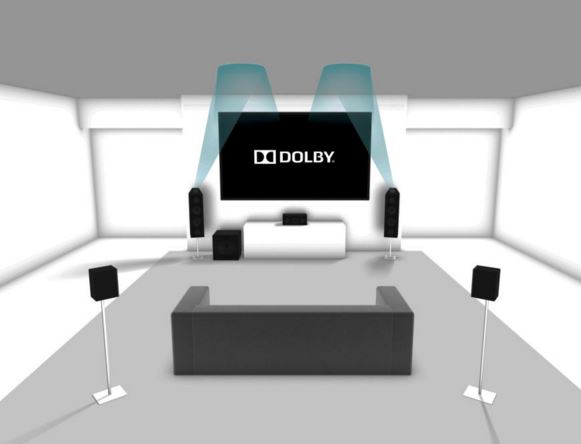
An old retail truth holds that great audio makes a TV look better - and today's immersive sound technology proves those veteran salesmen right. Dolby Atmos, DTS-X, and AURO 3D move far beyond 5.1 surround, adding height channels and object-based placement to wrap listeners in a genuine three-dimensional sound field. Entry-level Atmos systems start under $500, Blu-ray titles are already shipping, and the upgrade path is simpler than you might expect.

Ken Werner
Columns