
RA

Robert A. Fowkes

Home Theater Correspondent

Dr. Fowkes first started dabbling in computers and home electronics well over 50 years ago when he was a hobbyist building electronics and analog computers while in junior high school and well before the terms “Home Theater,” “High Definition” and “PC” were even a germ of an idea. After a long career as a Chemistry Teacher, Computer Coordinator and School Administrator, he has maintained an avid (some say obsessive) interest in computers and home electronics alike in retirement. As a frequent attendee of industry and enthusiast events and as a moderator on The Home Theater Forum, he remains actively involved and has developed a network of industry associations and friendships over the years. He thrives on the bleeding edge. His motto is, “The one who dies with the most toys wins!” Be sure to visit his Home Theater web site: The RAF Home Theater.

Revisiting the Component Approach to Audio/Video in Today's Home Theater Market

The Denon AVP-A1HDCI pre-pro, priced at $7,500 list and featuring Silicon Realta video processing, Audyssey EQ, and Ethernet-based firmware upgrades, consolidates what previously required four separate HDMI components into a two-box signal path. HDMI voltage threshold errors accumulate across chained devices - up to 30% per compliant component - meaning four devices in series can approach 120% cumulative error and trigger handshaking failures. Reducing the HDMI chain from four boxes to two directly improves signal stability, making modern pre-pros a practical middle ground between full component separates and all-in-one receivers.

Articles
Home Theater Concepts: Is a 1440x1080 HD Camcorder Inferior to a 1920x1080 HD Camcorder?

HD camcorders recording at 1440x1080 use rectangular pixels with a 1.33:1 aspect ratio, which when rendered scales horizontally to the equivalent of a full 1920x1080 16:9 frame. The pixel count difference between 1440x1080 and 1920x1080 is largely imperceptible in typical filming scenarios because adjacent pixels carry highly similar video information. For most consumers shooting standard footage, the rectangular-pixel format delivers comparable visual quality to square-pixel 1920x1080 capture, and may even produce a slightly more film-like appearance.

Columns

The Wonderful and Sometimes Confusing World of HDMI Connections

HDMI connectivity introduces a two-way handshaking protocol that can cause momentary signal drops, flickering, and compatibility failures, particularly when multiple components are chained together with cumulative spec deviations. Key practical guidance includes avoiding unpowered HDMI switches (which violate HDMI specifications by drawing power from the signal line), favoring 2x1 configurations over 1x2 splits, and recognizing that passive HDMI cables under 15 feet perform identically regardless of price, while runs exceeding that distance require a built-in repeater. For multi-display setups, a powered repeater such as the ACCELL UltraAV 1x2 Splitter or Radiient Repeat-6 1x6 is essential to maintain stable 1080p output across simultaneous displays.

Articles
A New Approach to Components in a Digital Audio/Video World

A New Approach to Components in a Digital Audio/Video World

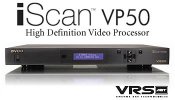
A component-based approach to home theater separates video processing from audio handling, with the author advocating for a dedicated standalone video processor such as the DVDO iScan VP50 to manage scaling and de-interlacing independently of displays and receivers. The proposed signal chain routes sources through an audio pre/pro like the Lexicon MC-8 for HDMI audio codec handling, then through a discrete video processor before reaching the display, ensuring 1080p signals bypass internal display processing. This architecture lets owners upgrade only the component that becomes outdated, avoiding the common trap of paying for redundant or inferior video processing buried inside A/V receivers.

Articles