Manufacturing

The Times They Are A-Changing: Hisense Buys Toshiba’s TV Business

Hisense just expanded its global television empire by acquiring Toshiba's TV business unit for 12.9 billion Japanese Yen. The deal grants Hisense 95% of Toshiba Visual Solutions, two Japanese factories, hundreds of R&D engineers, and a 40-year license to use the Toshiba brand across Europe, Southeast Asia, and beyond. Combined with its existing Sharp brand rights, Hisense now controls a formidable multi-brand strategy - and the implications for the global TV market run deeper than this announcement suggests.

Pete Putman
Columns

Turn Back The Clock?

Hon Hai's proposed U.S. LCD manufacturing plant sounds like an economic win, but the math tells a different story. Automated factories create fewer permanent jobs than politicians promise, and panels built stateside will cost significantly more than those shipped from China or Korea. With Sharp holding less than 1% of the 4K TV market and Samsung commanding over 30%, a domestically produced television faces brutal headwinds. The full picture raises uncomfortable questions about who actually benefits.

Pete Putman
Columns

As The World Turns: Vizio Is Acquired by LeEco

Sony's television and smartphone divisions keep bleeding red ink while rivals like Panasonic found profitability by cutting hardware loose. Chairman Kazuo Hirai refuses to rule out exiting both businesses, even as institutional investors push Sony to abandon consumer electronics entirely and focus on its profitable entertainment and gaming assets. Whether Sony can finally follow Panasonic's painful but effective playbook - or remains trapped by its own legendary hardware legacy - is the defining question facing the company right now.

Pete Putman
Columns

You Don’t Need A Weatherman

Sharp Corporation's potential sale to Hon Hai Precision Industries signals a seismic shift in consumer electronics manufacturing. Once commanding 21% of global LCD TV market share, Sharp now faces a $5B buyout offer from Foxconn's parent company after a decade of staggering losses. The deal reveals why Chinese manufacturers are positioned to dominate display technology - and why the old Tokyo business model may be finished for good.

Pete Putman
Columns

How Sharp Makes Its “Free-form” Displays

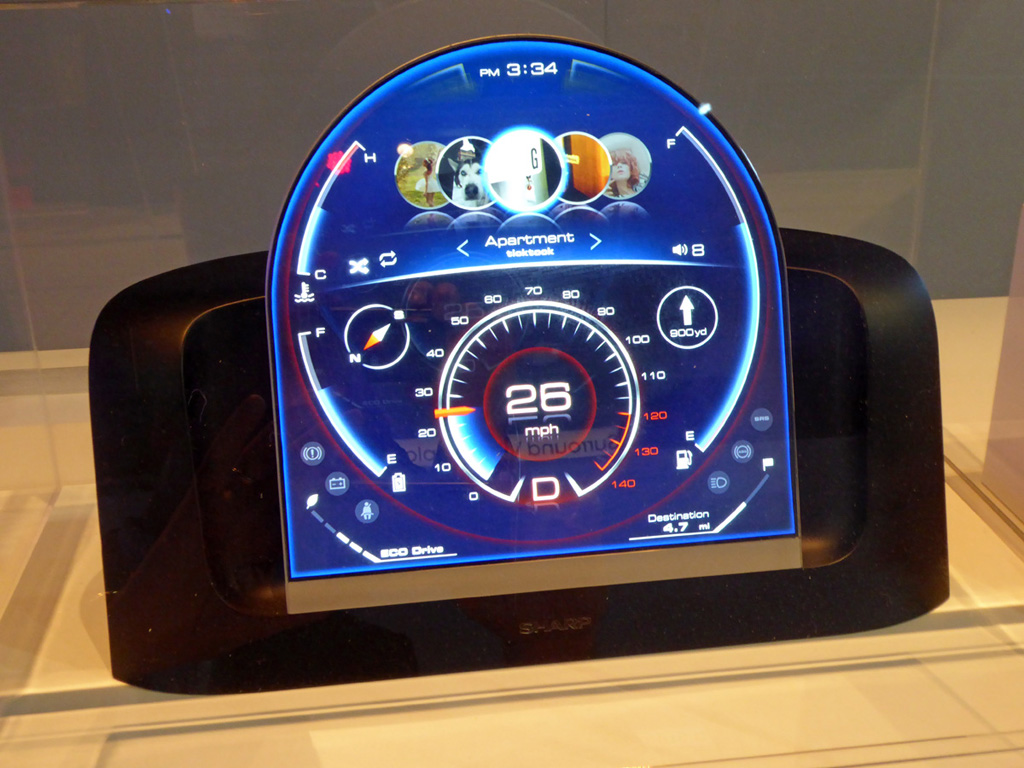
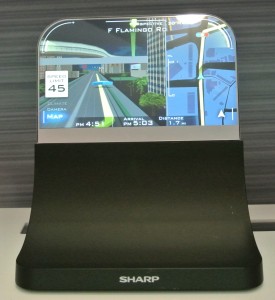
Sharp's free-form displays solve a longstanding engineering puzzle by eliminating conventional row drivers from display edges entirely. By dispersing gate driver monolithic circuitry across individual pixel locations within the image area and routing control signals through the bottom edge, Sharp achieves ultra-thin bezels on three sides. The result enables gracefully curved display shapes ideal for automotive instrument clusters - and the architecture works equally well for OLED panels.

Ken Werner
Columns

The Cruelest Month, Indeed…

April is the cruelest month - and Sharp knows it well. Struggling since the Great Recession, the Japanese electronics giant is cutting 6,000 jobs worldwide while hemorrhaging hundreds of millions in losses. Despite owning the world's largest LCD fabrication plant and producing competitive 4K and 8K glass, consumers simply aren't buying enough Aquos TVs. With prices in free-fall and rivals Toshiba and Sony facing their own crises, Japan's TV industry faces a reckoning that may already be too late to reverse.

Pete Putman
column

LG Display’s New Line for TV-sized OLED Panels to Ramp up this Year

LG Display's new M2 OLED panel line is set to quadruple production capacity, targeting 34,000 units monthly across 55-, 65-, and 77-inch sizes. Dramatic yield improvements - driven by advances in IGZO stability and oxide-TFT process control - are pushing costs down, though prices will likely remain double those of Ultra HD LCD TVs through 2016. Chinese manufacturers like TCL and Hisense may soon enter the picture with something unexpected.

Ken Werner
Columns

It’s All About The Pipes

LG Display's Paju manufacturing complex reveals why OLED technology represents a massive gamble against a commoditized LCD market. A firsthand tour of the fabs and Innovation exhibit exposes the real science behind white OLED emitters, their stunning HDR shadow detail, and the brightness trade-offs that separate them from quantum-dot LCD rivals. Unresolved questions about off-axis color tinting and differential aging of blue emitters suggest the technology still has some intriguing secrets to give up.

Pete Putman
Columns

The OLED Firmament Does Not Quake — but it’s Vibrating a Little

Samsung's grip on small AMOLED displays remains iron-clad, yet a credible challenger is emerging from China. LG, meanwhile, keeps pushing OLED TV toward mass-market viability despite persistent manufacturing hurdles. At SID 2014, Tianma unveiled polished AMOLED prototypes and announced a Gen 5.5 fab targeting commercial production by mid-2015. Their professional, North-American-caliber presentation signals a company serious about competing at the highest level. Whether Tianma can truly rattle Samsung's dominance is a story worth watching closely.

Ken Werner
column

A Tale Of Two Companies, Part II: The Best-Laid Plans…

Panasonic's 2014 TV lineup goes all-in on LCD, 4K, and cloud connectivity, ditching plasma entirely while delivering impressive color performance and HEVC decoding on flagship models. Meanwhile, Sony posted another net loss of $1.23 billion, dragged down by PC operations, disc manufacturing write-offs, and PlayStation 4 launch costs - even as its TV division trimmed losses by 70%. Whether Sony's restructuring moves come fast enough to matter remains an open question.

Pete Putman
column

HDTV Expert - Consumer Television: It's Business As Usual (Or Maybe Not)

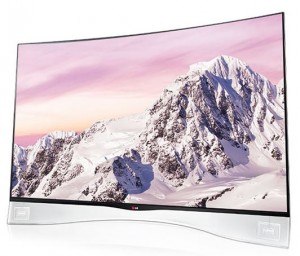
Samsung sold an estimated 49 million flat-panel TVs in 2013, cementing eight consecutive years at the top of the global television market, while Samsung and LG together command over 40% of worldwide TV share. Sony and Sharp continue bleeding market share, with Sharp holding just 5% globally and 3% in the U.S. as of Q3 2013, and LG's 55-inch curved OLED has already dropped 67% in price to roughly $4,910 in the UK. Vizio's new full-array LED 4K smart TVs, starting at $1,000 for a 50-inch model, signal further price compression that threatens premium-tier manufacturers.

Pete Putman
Columns

HDTV Expert - The Diverging Fortunes of Sony, Panasonic, and Sharp: Is There Life After Television?

Sony posted a net operating loss of $197M in Q2 2013, with its TV division alone losing $95M, while Panasonic raised its operating profit forecast to $2.75B after downsizing plasma TV operations and exiting plasma manufacturing entirely by March 2014. Sharp returned a $138M profit driven by solar cell demand, recovering from a $5.5B loss just one year prior. For consumers and investors, the data signals that Japanese TV brands face structural pricing pressure from Samsung, LG, and Chinese manufacturers like Hisense and TCL, with even the shift to 4K LCD TVs at roughly $80 per inch unlikely to reverse the trend.

Pete Putman
Columns

HDTV Expert - It's "Fade To Black" for Plasma and Projectors in Japan

Panasonic's exit from plasma TV production by March 2014 marks a broader collapse for Japanese display manufacturing, as plasma held only 5.7% global market share in FY2012 compared to LCD's dominant 87.3%. Chinese manufacturers are accelerating the pressure, with CSOT's 110-inch 4K panels and sub-$40-per-diagonal-inch LCD pricing reshaping both consumer and commercial AV markets. Mitsubishi Electric Visual Solutions has already withdrawn from the projector market entirely, and Sharp faces similar pressure, signaling that front projection and niche display technologies are losing ground to large-format LCD screens.

Pete Putman
Columns

HDTV Expert - A True Revolution in Display and Touch-screen Manufacturing Begins

Cambrios, TPK, and NISSHA have formed TPK Film Solutions to volume-produce ClearOhm, a silver nanowire-based transparent conductor that achieves near-100% optical transmission at sheet resistances as low as 25 ohms/square on PET substrates, outperforming the industry-standard indium tin oxide (ITO) on every key metric. Unlike ITO, which cracks and loses conductivity by a factor of 1000 or more after a single flex cycle, silver nanowire film maintains stable resistance over 50 bend cycles, making it viable for flexible and thin-form-factor devices. With Lenovo already adopting ClearOhm in its Flex 20 touchscreen and volume production targeted for Q2 2014, this transition has direct implications for the cost and design flexibility of consumer touchscreens worldwide.

Ken Werner
Columns

HDTV Expert - Tough Times Ahead For Toshiba

Toshiba is restructuring its television business after losses exceeding 50 billion yen ($512 million) annually, announcing plans to raise ODM-sourced production from 40% to 70% by FY2014 while closing two overseas manufacturing facilities and cutting roughly 3,000 jobs. The company is doubling down on large-screen Ultra HD (4K) LCD TVs and digital signage as its primary differentiators, while merging TV and CE operations into a new Toshiba Consumer Electronics Corporation. With a global TV market share below 5% and potential withdrawal from unprofitable regions including possibly North America, the path to viability remains uncertain.

Pete Putman
Columns