Smart TVs

The Times They Are A-Changing: Hisense Buys Toshiba’s TV Business

Hisense just expanded its global television empire by acquiring Toshiba's TV business unit for 12.9 billion Japanese Yen. The deal grants Hisense 95% of Toshiba Visual Solutions, two Japanese factories, hundreds of R&D engineers, and a 40-year license to use the Toshiba brand across Europe, Southeast Asia, and beyond. Combined with its existing Sharp brand rights, Hisense now controls a formidable multi-brand strategy - and the implications for the global TV market run deeper than this announcement suggests.

Pete Putman
Columns

On Samsung , Pro AV, Car Audio, and Control

Samsung's $8 billion acquisition of Harman International signals far more than a play for car audio dominance. Chinese rivals like TCL and Hisense are squeezing TV margins, the Galaxy Note 7 disaster cost billions, and smartphones have plateaued. Samsung gains automotive display technology, digital signage muscle, and IoT infrastructure - but its appetite for traditional AV control systems may be far smaller than the pro AV community hopes. The real story behind this deal reveals where the entire industry is heading.

Pete Putman
column

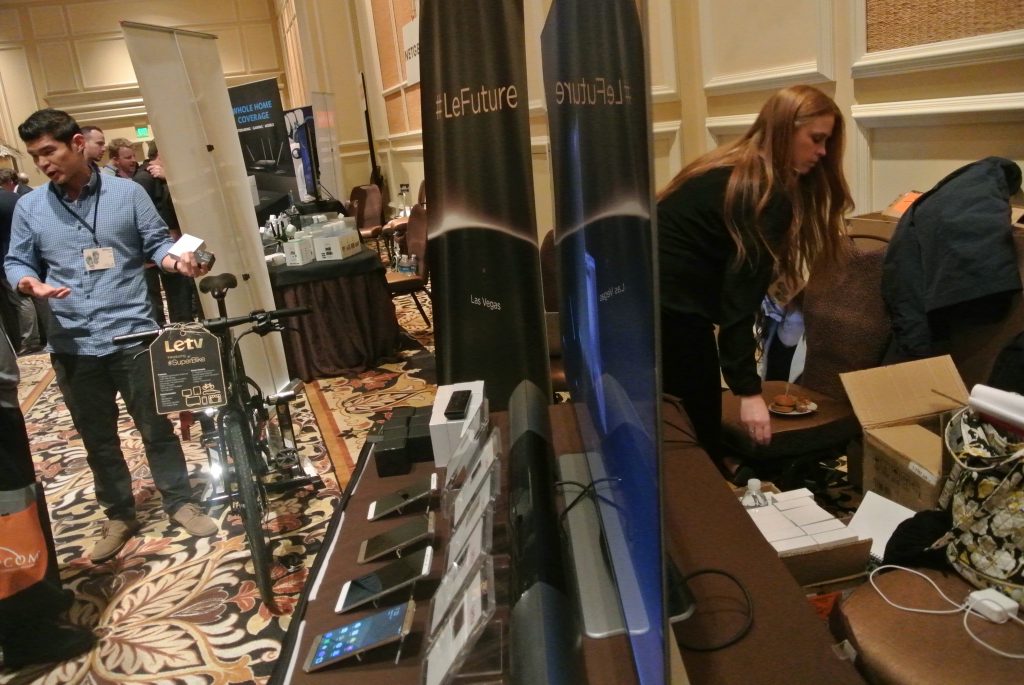
LeEco: Today Vizio, Tomorrow the World?

LeEco's acquisition of Vizio for $2 billion signals far more than a hardware deal. The Chinese tech giant - already selling TVs below manufacturing cost to drive content subscriptions - is building a global ecosystem spanning smartphones, streaming, electric cars, and cinema production. With a rumored Netflix partnership and aggressive U.S. expansion plans, LeEco isn't just buying American market share. What it does next with Vizio's distribution muscle could reshape how Americans buy and watch television.

Ken Werner
Columns

As The World Turns: Vizio Is Acquired by LeEco

Sony's television and smartphone divisions keep bleeding red ink while rivals like Panasonic found profitability by cutting hardware loose. Chairman Kazuo Hirai refuses to rule out exiting both businesses, even as institutional investors push Sony to abandon consumer electronics entirely and focus on its profitable entertainment and gaming assets. Whether Sony can finally follow Panasonic's painful but effective playbook - or remains trapped by its own legendary hardware legacy - is the defining question facing the company right now.

Pete Putman
Columns

Of Samsung, Big Screens, IoT, HDR, And Patience

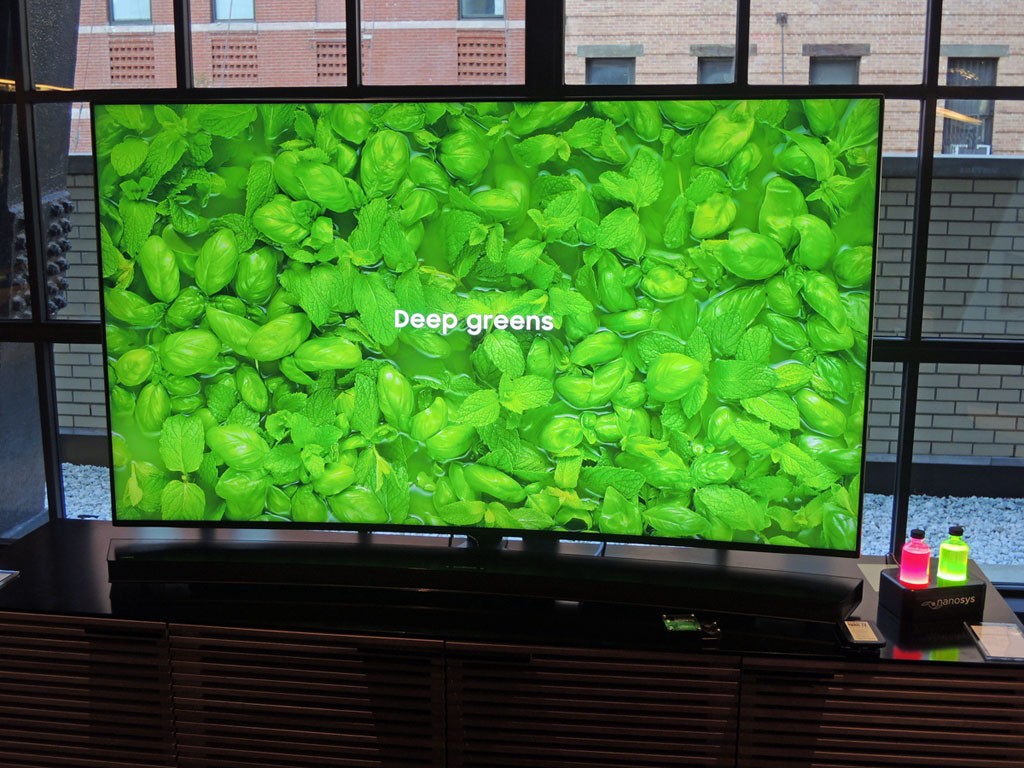
Samsung's 2016 SUHDTV lineup redefines screen size expectations, with quantum dot HDR panels stretching to a staggering 88 inches and SmartThings IoT integration turning your television into a whole-home control hub. Prices have dropped dramatically since the plasma era, yet competing HDR standards, limited 4K content, and HDMI bandwidth constraints create real purchasing risks. Before you pull the trigger on that gorgeous new Ultra HD set, there are a few critical factors worth weighing carefully.

Pete Putman
column

What Will Apple Do Next?

Apple's next revolutionary product may not exist. From the overhyped iWatch to persistent Apple TV set rumors and far-fetched car speculation, analyst predictions keep missing reality. Apple succeeded by refining products people already wanted - iPod, tablets, smartphones - but no amount of software magic creates demand for the unnecessary. The new Apple TV streaming box is solid, not groundbreaking. What Apple does next in connected cars may matter more than any consumer hardware announcement.

Ken Werner
Columns

A Trend Is A Trend – Until It Isn’t

Analysts once declared large smartphones dead on arrival, yet 5- to 6-inch screens now dominate sales. Meanwhile, tablets are losing ground as consumers hold onto devices for five to seven years instead of upgrading. The real growth story is emerging in 2-in-1 convertibles, where turnover rivals smartphone upgrade cycles. One connector standard quietly positioning itself to unify the entire mobile ecosystem deserves a much closer look.

Pete Putman
Columns

Has Sony Finally Seen The Light?

Sony's television and smartphone divisions have hemorrhaged billions while rivals like Panasonic quietly returned to profitability by cutting losses cold turkey. Chairman Kazuo Hirai now refuses to rule out exiting both businesses, targeting a dramatic turnaround by 2018. Meanwhile, Sony's entertainment and gaming divisions remain genuinely profitable, prompting institutional investors to demand a radical strategic pivot. Whether Sony can finally abandon its consumer electronics legacy before the losses become truly unrecoverable remains the defining question.

Pete Putman
Columns

Digital Life Matters; Displays Don’t

Hardware margins are collapsing, and displays alone can no longer sustain a business. Samsung makes the phone; Google makes the money - a stark reality reshaping every corner of consumer electronics. Companies that build the most compelling digital ecosystems, ones users find difficult to leave, are the ones that will prosper. The display is merely a window to a user's digital life, and understanding what lies beyond that glass changes everything about how we evaluate the industry.

Ken Werner
Columns
HDTV Expert - The RCA Brand Prospers

HDTV Expert - The RCA Brand Prospers

RCA, now a licensed brand managed by Technicolor and manufactured by ON Corporation of Korea, is entering the Ultra HD TV market in 2014 with 55-, 65-, and 84-inch sets featuring native 4K resolution of 3840x2160, LED backlights, and the Google TV platform providing access to over 100,000 on-demand titles. The more affordable HDTV tier, ranging from 28 to 65 inches, integrates smart features via a Roku Streaming Stick inserted into an MHL port. Buyers considering value-tier 4K sets will find RCA positioning itself competitively as UHD adoption accelerates, with the brand reporting sales growth exceeding 20% in the past year.

Ken Werner
Columns

HDTV and Home Theater Podcast - Podcast #610: Why are the networks upset with Aereo?

Aereo routes dedicated over-the-air antenna signals to Internet-connected devices, letting subscribers watch and record live OTA HD broadcasts outside the traditional cable or satellite ecosystem. Courts have so far upheld the service, yet networks remain hostile because retransmission fees - not ad revenue - are the core financial stake, and a DirecTV-style adoption of the same model could cost them significantly more. For cord-cutters already abandoning pay TV, Aereo offers a legal, measurable viewing path that could preserve advertiser reach and enable targeted ad insertion rather than simply eroding network audiences.

The HT Guys
Podcasts

Panasonic Announces Pricing & Availability For Its Inaugural Line Of Streaming Media Players

Panasonic's first streaming media player lineup includes two models: the DMP-MST60 ($99.99) with 3D capability, VIERA Connect smart TV platform, Miracast display mirroring (requiring Android 4.2 or higher), and 2D-to-3D conversion, and the DMP-MS10 ($79.99) with built-in Wi-Fi and IP VOD access to services including Netflix, Hulu Plus, and YouTube. Both units support external HDD playback, giving users flexible local and cloud-based content options. Consumers seeking an affordable entry point into smart TV functionality without replacing their existing display have two distinct tiers to consider.

HDTV News
Bulletins

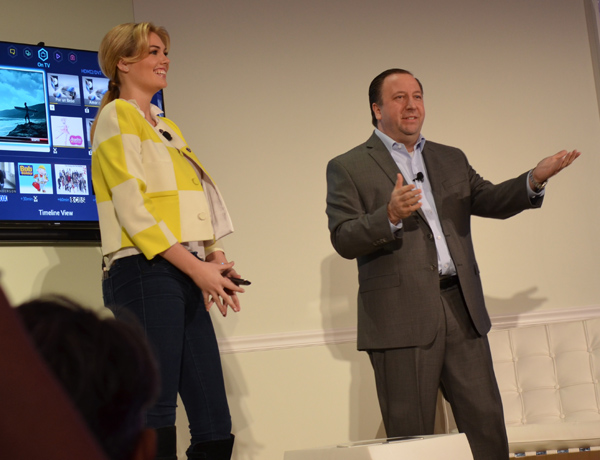
HDTV Expert - Samsung features Smart TV and Kate Upton - both impressive - at New York Line Show

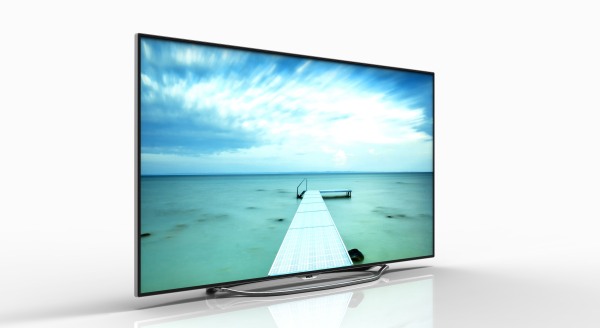
Samsung's 85-inch 9000 Series UHD-TV, priced at $39,999 and built on a Gen 8 LCD panel line, delivers native 4Kx2K resolution with full-array local dimming across 720 processing cells for color, contrast, and detail. The set includes 2GB of app storage, a quad-core processor via the $299 Evolution+ upgrade module, and a full Smart Hub with voice control, gesture control, and facial recognition. Buyers considering this set should weigh its impressive 2K-to-4K upconversion and four-year hardware upgrade path against a price point that rivals entry-level luxury vehicles.

Ken Werner
Columns
SmartStick Makes "Any" TV Smart

SmartStick Makes "Any" TV Smart

The Favi Entertainment SmartStick is a $49.99 Android 4.0 HDMI dongle featuring an ARM Cortex-A9 at 1.0 GHz, 1GB DDR3 RAM, and 802.11 b/g/n Wi-Fi, designed to add Netflix, YouTube, browsing, and email to existing displays. Testing revealed persistent Wi-Fi instability even on a 100Mbps fiber connection clocking 57Mbps at the router, a non-functional remote, and output limited to 720p and 1080p, excluding the estimated 124 million US TVs lacking HDMI or requiring 480i/1080i signals. Buyers should verify HDMI and resolution compatibility with their specific TV before purchasing, and confirm a flexible return policy given the erratic real-world performance documented here.

Rodolfo La Maestra
Reviews

The Revival of RCA Television

ON Corporation of Seongnam, Korea is manufacturing RCA-branded televisions under license from Technicolor, headlined by the LED55C55R120QS 55-inch smart TV running Android 4.0 at a projected MSRP of $999-$1049. The set features a 120Hz panel, 350-nit luminance, an M-Star system-on-chip integrating smart-TV functions, and the M-GO content platform co-developed by Technicolor and DreamWorks. Consumers considering value-tier large-screen TVs or the niche combination of Android tablets with built-in ATSC and Dyle mobile tuners will find RCA's repositioned lineup worth evaluating.

Ken Werner
Columns