
Laser TVs

HDTV Expert - Projector Manufacturers Are Going Lamp-Free. But Is It Too Late?

HDTV Expert - Projector Manufacturers Are Going Lamp-Free. But Is It Too Late?

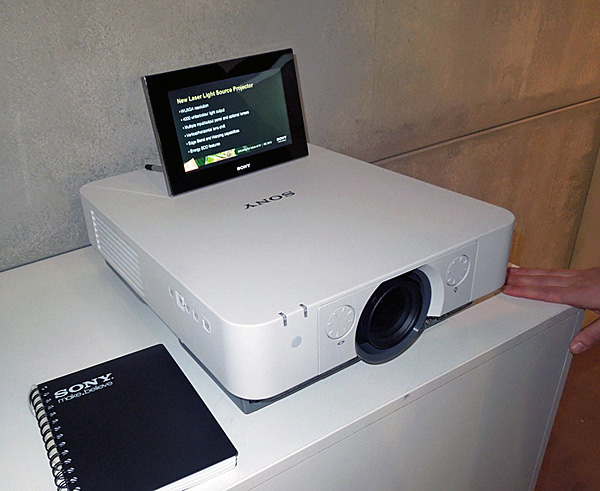
Sony's new laser-powered 3LCD projector, built on the FH31-series chassis with a claimed 20,000-hour lifespan and 4,000-lumen output, signals a broader industry shift toward lamp-free projection as manufacturers including Panasonic, Epson, and NEC race to market with laser and laser/LED hybrid models. In side-by-side testing, Sony's unit showed a visible edge in color saturation over Panasonic's PT-RZ470 single-chip DLP projector. However, AV professionals report that large LCD displays - often 70 to 90 inches - are already displacing projectors in classrooms and conference rooms due to superior brightness, lower maintenance, and dramatically reduced lamp-replacement overhead.

Pete Putman
Columns

HDTV Expert - Lamp? What Lamp?

Lamp-free projection technology is emerging as a competitive response to large-format LCD displays, with manufacturers at Integrated Systems Europe 2013 showcasing LED and laser-based projectors ranging from 500 lumens to over 60,000 lumens for digital cinema. Sony debuted the first 3LCD laser imaging system, while Christie Digital demonstrated a 60,000-plus lumen laser DLP Cinema projector during a GI JOE: RETALIATION screening, and LED-only designs currently top out at 1,100 lumens with laser/LED hybrids bridging up to 4,000 lumens. For end users, lamp-free designs promise 15,000 to 20,000 hours of essentially maintenance-free operation with instant on/off capability, directly addressing the key advantages that large LCD panels hold over conventional projectors.

Pete Putman
Columns

HDTV Expert - ISE 2013: Oh, It's ON! - Pete Putman

At ISE 2013, Sony unveiled a prototype 3LCD laser projector rated at 4000 lumens with 1920x1200 (WUXGA) resolution, marking the first publicly demonstrated 3LCD design to use a 100% laser light engine. Mitsubishi countered with three LaserVue DLP models featuring hybrid red LED and blue laser diode illumination, promising 20,000 to 30,000 hours of rated lamp-free operation. These lampless projectors are a direct response to the growing commercial adoption of large-format LCD displays from 70 to 95 inches, which undercut projector installations on cost, maintenance, and ambient light performance.

Pete Putman
Columns

HDTV Almanac - New Type of "Laser TV"

Mitsubishi has developed a hybrid backlight system for LCD flat panels that pairs a red laser with a high-brightness cyan LED to produce mixed white light, delivering better color performance than standard white LEDs or RGB LED arrays. Because the red laser is approximately 10 times brighter than an equivalent LED, the design requires one-tenth the number of laser components, though engineering adequate light guides to blend the two sources remains a key challenge. Consumers could benefit from improved color accuracy in LCD displays without the component complexity of full RGB LED backlighting.

Alfred Poor
Columns

Mitsubishi Digital Electronics America Adds New 75-Inch LaserVue TV to Bolster Industry's Broadest Line of 60-Inch-and-Larger 3D TVs Available Today

Mitsubishi's 75-inch LaserVue TV (Model L75-A91, $5,999) introduces a first-ever Cinema Color mode and StreamTV internet media, while operating at approximately 128 watts and exceeding Energy Star qualifications by over 50 percent. The accompanying 3D Starter Pack (3DC-1000) includes active shutter eyewear, a 3D emitter, and a 3D Adapter supporting HDMI 1.4a signal formats including side-by-side, top-bottom, and frame-packing. Buyers seeking large-screen 3D home theater will find this laser-driven display offers a practical path to cinema-grade color and energy efficiency at 75 inches.

Shane Sturgeon
Bulletins

HDTV Almanac - New Laser HDTV

Prysm's laser phosphor display (LPD) steers a blue laser - the same type used in standard Blu-ray players - via a spinning multi-sided mirror to excite red, green, and blue phosphors, producing an emissive image with near-unlimited viewing angles. A 1080p configuration requires 30 individual 25-inch modules (each at 320x240 pixels) to form a 142-inch diagonal display, and the technology consumes roughly one-quarter the power of a comparable LCD. Targeted initially at commercial venues such as airports and sports arenas, LPD remains far from consumer price points despite its use of off-the-shelf components.

Alfred Poor
Columns

HDTV Almanac - Laser TV Price Set; Brace Yourself

Mitsubishi's 65-inch Laservue rear-projection 1080p laser TV is priced at $6,999, a steep premium over comparable 65-inch flat panels from Sharp and Panasonic selling below $4,000, and far above Mitsubishi's own 65-inch DLP rear-projection model at $1,899. The solid-state laser design eliminates the micro arc lamp and reduces optical components, yet the price undercuts its core value proposition. At this price point, the Laservue is unlikely to revive the struggling rear-projection market and will appeal only to early adopters willing to pay a significant premium.

Alfred Poor
Columns

HDTV Almanac - Orders for Projector Lasers

QPC Lasers has secured a $3.5 million contract to develop red, green, and blue lasers for a 3D projector system, adding to a previously announced $12 million Laser TV contract. Laser-based displays offer advantages in color accuracy and contrast but face technical hurdles such as 'speckle,' a visual artifact that gives solid colors a sparkling, textured appearance. Both contracts remain in development phases, suggesting commercially available laser projection products are still at least a year away from reaching consumers.

Alfred Poor
Columns

HDTV Almanac - Laser TV Makes Green Claim

Mitsubishi's 65-inch LaserVue laser TV, rated at 200 watts, promises roughly half the power consumption of comparable LCD sets and one-third that of plasma displays, making it a notable contender in energy-efficient large-screen technology. For context, a 47-inch LCD HDTV can draw 250 watts or more, meaning the LaserVue delivers four times the screen area at 20% lower power. Pricing remains undisclosed, and without a competitive price point against flat-panel alternatives, the technology's green credentials alone may not be enough to drive meaningful sales.

Alfred Poor
Columns

Mitsubishi Announces Screen Sizes for LaserVue(TM) Laser TV Shipping in Q3 2008

Mitsubishi Digital Electronics America announced its LaserVue laser TV in 65-inch and 73-inch models, with the 65-inch Diamond edition shipping to retailers in Q3 2008. The laser-based light engine delivers a color gamut measured at approximately 200 percent of BT.709, roughly twice that of standard HDTVs, while operating at under 200 watts, about half the power consumption of comparable LCD TVs. Consumers seeking large-format displays with superior color accuracy and reduced energy costs will find LaserVue a technically distinct alternative to conventional projection and flat-panel technologies.

Shane Sturgeon
Bulletins

Mitsubishi Introduces New Line of HDTVs

Mitsubishi Digital Electronics America unveiled its 2008 HDTV lineup, anchored by 1080p DLP models up to 73 inches featuring Smooth120Hz processing and a 6-Color Processor for expanded color reproduction, alongside seven Ultra Thin Frame LCD HDTVs ranging from 40 to 52 inches with 10-bit panels and 120Hz dejudder for film content. The lineup also introduces LaserVue, the company's laser-powered TV that claims to display twice the color spectrum of conventional HDTVs while consuming roughly half the power of LCD and one-third that of plasma displays. Buyers seeking large-format performance have a range of options from April 2008, with LaserVue units targeting retail availability in Q3 2008.

Shane Sturgeon
Bulletins

HDTV Almanac - Blue Lasers in Peril?

Blu-ray discs rely on blue laser light, which has a shorter wavelength than the red lasers used in standard DVDs, enabling it to read the far smaller data pits required for high-definition content. Inventor Gertrude Neumark Rothschild holds a 1993 patent covering blue and violet LEDs and lasers, and has petitioned the U.S. International Trade Commission to block imports of products using blue laser technology without a licensing agreement. With 30 companies named as respondents, including major consumer electronics manufacturers, the outcome could force industry-wide licensing settlements affecting Blu-ray and related products.

Alfred Poor
Columns

HDTV Almanac - CES 2008: Laser TV — Too Little, Too Late?

Mitsubishi unveiled a prototype 50-inch, 1080p Laser TV at CES 2008, positioning it as a new display category rather than rear projection, with a chassis roughly 10 inches deep suitable for shelf or wall mounting. The prototype demonstrated deep blacks and vivid colors with no visible speckle at 15 feet, but exhibited noticeable posterization artifacts on color gradient images, signaling unfinished image processing. With no confirmed pricing or firm ship date beyond a vague 'later this year' target, consumers considering this laser-based alternative to flat panels will need to wait for a retail-ready product before drawing conclusions.

Alfred Poor
Columns

Mitsubishi Introduces New Category of Large-Format Televisions with Groundbreaking Laser Technology

Mitsubishi Digital Electronics America unveiled its LaserTV at CES 2008, claiming the laser-powered display delivers twice the color range of conventional HDTVs, which reproduce less than 40 percent of the visible color spectrum. The large-format rear-projection set also supports 3D viewing via a partnership with RealD, and consumes less power than comparably sized flat-panel displays. For home theater buyers seeking wider color gamut and energy efficiency in a large-format 1080p package, LaserTV represented a notable departure from existing DLP and LCD HDTV options.

Shane Sturgeon
Bulletins

HDTV Almanac - Good News for Laser TV

Mitsubishi is expected to unveil Laser TVs at CES 2008, signaling renewed momentum for a display technology that uses solid-state lasers as a light source, eliminating the need for costly periodic lamp replacements. The coherent laser beam delivers more light to the screen with fewer optical components, reducing parts cost and enabling thinner chassis designs compared to conventional rear-projection sets. For consumers eyeing large-format HDTVs, these efficiency and cost advantages make Laser TV a technology worth watching as it moves closer to retail availability.

Alfred Poor
Columns