4K Ultra HD

CES 2019 In the Rear View Mirror

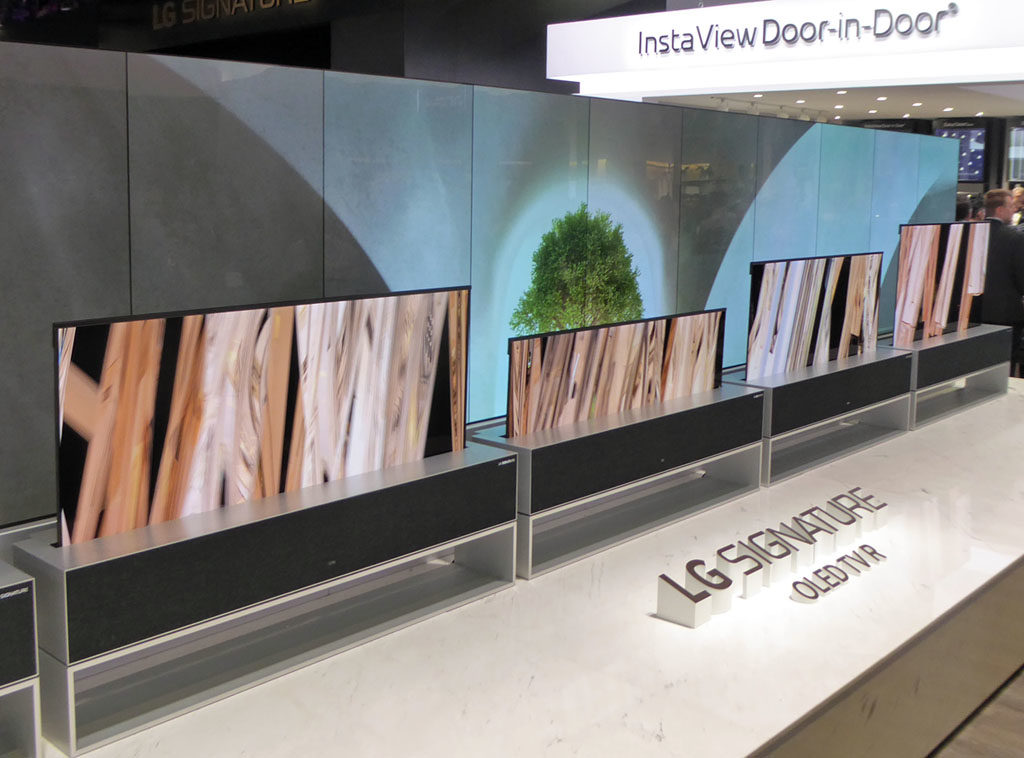
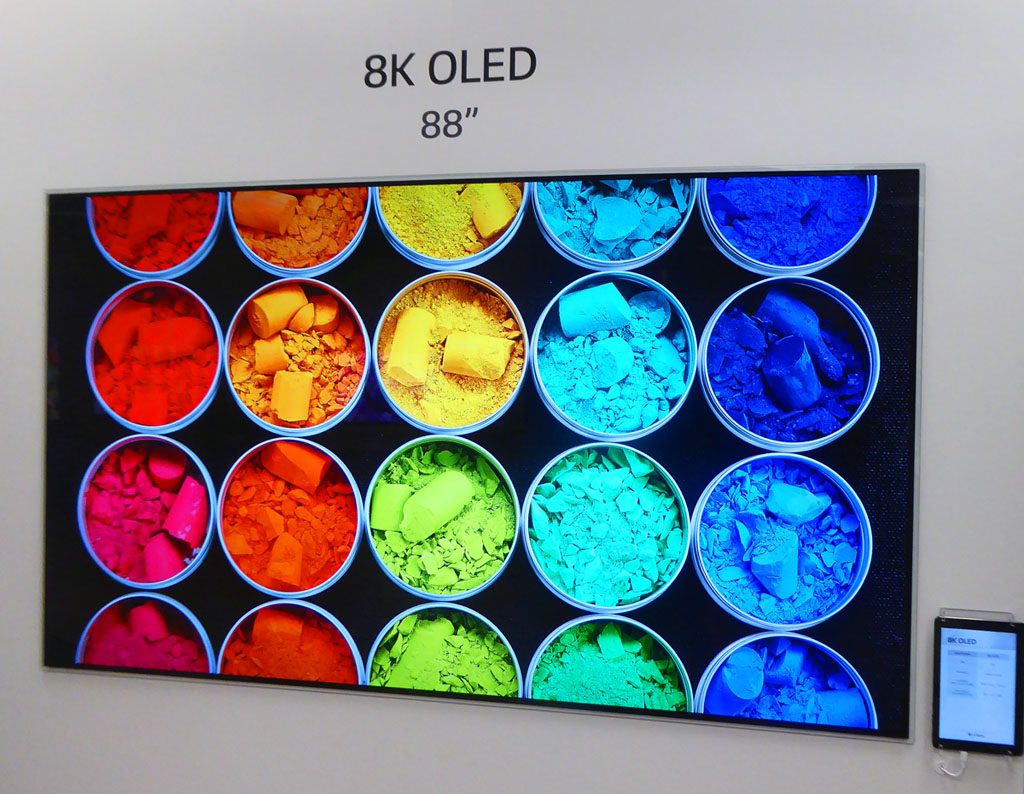
CES 2019 delivered a striking reminder of how far display technology has traveled since plasma giants and upscaling DVD players ruled the show floor. Eight-K televisions from LG, Samsung, Sony, Sharp, and a wave of Chinese brands dominated booths, while AI-powered processors scaled standard-definition content with jaw-dropping results. Mini-LED backlights, collapsing TV prices, and near-field wireless technology at 96 gigabits per second signal where home entertainment is heading next.

Pete Putman
Columns

HDMI 2.1 Update – Pretty Much Status Quo

HDMI 2.1 arrived with a quantum leap in bandwidth - jumping from 18 Gb/s to a stratospheric 48 Gb/s - yet a New York press conference revealed surprisingly little new ground. Packet-based signaling, DSC compression, and Socionext chipsets are moving the standard forward, but optical support remains absent and manufacturer adoption stays murky. With 8K TVs hitting shelves and high frame rate video looming, the real test comes at CES.

Pete Putman
Columns

Heads Up! Here Comes 8K TV (or, The Case Of The Amazing Vanishing Pixels)

8K displays are arriving faster than most consumers expected, with nearly 6 million units projected to sell by 2022. Sharp, Sony, Samsung, and LG are already producing panels, while Japan's NHK drives 8K broadcasting toward the 2020 Tokyo Olympics. IGZO transistors promise 120Hz refresh rates and lower power consumption, making 8K technically formidable. Meanwhile, 4K pricing collapses into mainstream territory, raising a provocative question about what signal distribution infrastructure must overcome before 8K reaches your living room.

Pete Putman
column

The 2018 HPA Tech Retreat: Digital In The Desert

Over 600 industry professionals converged on Palm Desert for the 2018 HPA Tech Retreat, where HDR format wars, Ultra HDTV commoditization, and gadget fatigue dominated conversation. Cheap HDR-equipped sets are flooding the market, yet HDMI handshake failures and scarce 4K content leave early adopters frustrated. Roundtable discussions revealed that even tech-savvy professionals are questioning whether every device in their home truly needs an internet connection - a tension that defined the entire event.

Pete Putman
Columns

CES 2018 In The Rear View Mirror (Or, what a difference a decade makes…)

A decade separates two very different Consumer Electronics Shows, and the contrast is staggering. In 2008, plasma giants ruled Las Vegas while Netflix had just launched streaming and tablets didn't exist. Today, a 55-inch 4K smart TV costs what a mid-range plasma fetched back then, and televisions themselves have been upstaged by AI assistants, autonomous cars, and connected appliances. What the industry looked like then versus now reveals where it may be heading next.

Pete Putman
Columns

InfoComm 2017 In The Rear View Mirror

InfoComm 2017 delivered a clear signal: AV-over-IT has finally arrived. After nearly 15 hours of presentations covering RF, wireless, 4K, and networked AV, one theme dominated the show floor - TCP/IP networks are actively displacing complex HDMI matrix switchers and distribution amplifiers. LED walls are cutting into projector sales, China's manufacturing dominance is collapsing display prices, and quantum dot technology is accelerating faster than anyone predicted. What comes next for the AV industry may surprise even the veterans.

Pete Putman
Columns

InfoComm Tech Trends for 2017

HDR compatibility is flooding trade show floors and product spec sheets, but what does it actually mean for signal management? High dynamic range demands far more than wider luminance - it requires 10- to 12-bit color depth, expanded Rec.2020 color gamut, and data rates that push HDMI 2.0 to its limits. Quantum dots, OLED, and compression tools like Display Stream Compression each play a role in solving the bandwidth puzzle, and the full picture is more nuanced than any marketing badge suggests.

Pete Putman
Columns

High Dynamic Range: It’s Here!

High dynamic range imaging has arrived, and it is reshaping how displays reproduce light, shadow, and color. HDR expands tonal capture from roughly 11 f-stops to 22, pushing peak brightness into the thousands of cd/m2 while wide color gamut unlocks over one billion color shades. Prices are falling fast, HDMI and DisplayPort standards are scrambling to keep pace, and industries from medical imaging to military simulation are already taking notice.

Pete Putman
Columns

Three Premium 2017 LCD-TVs Plot Different Paths to Enhanced Performance

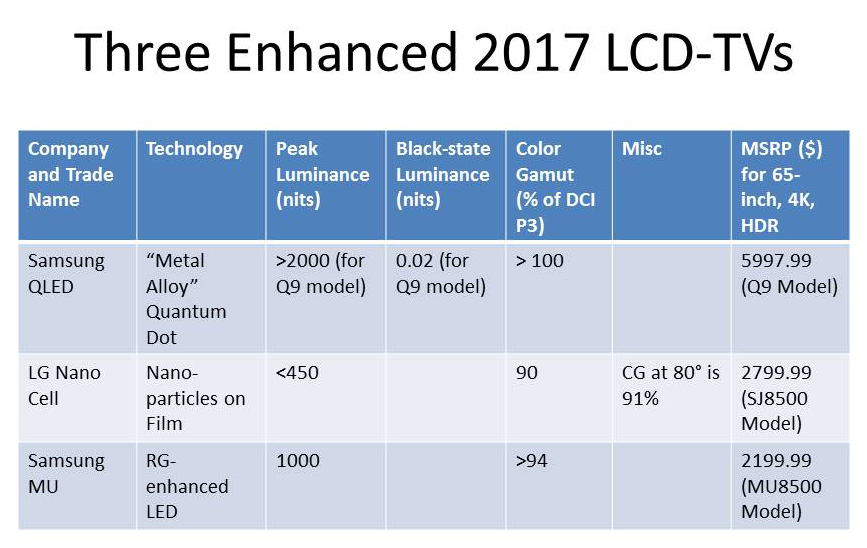
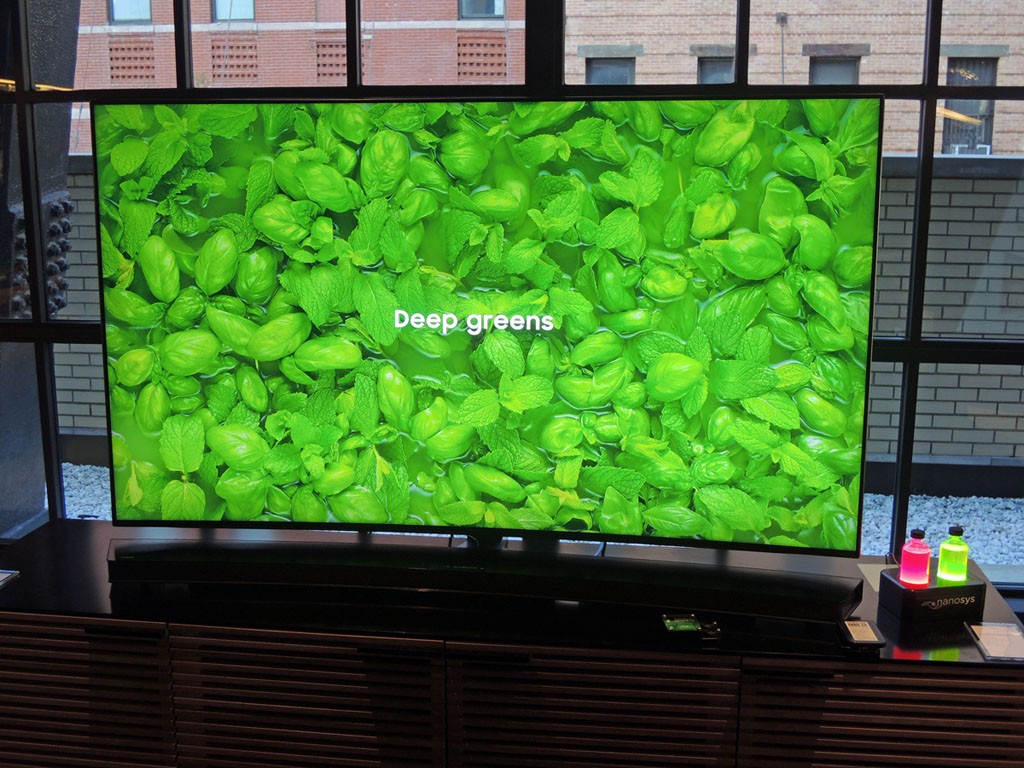
White LEDs in conventional LCD backlights fall short on green and red purity - a problem three premium 2017 sets attack in strikingly different ways. Samsung's QLED Q Series deploys redesigned quantum dots for peak luminance exceeding 2000 nits, LG bets on Nano Cell film technology for wider viewing angles, and Samsung's MU series uses red-green phosphor LEDs at a more accessible price point. Which approach wins the long game against OLED remains an open question.

Ken Werner
Columns

Two Keys to Optimal HDR TVs: Dynamic HDR Metadata and Tone Mapping

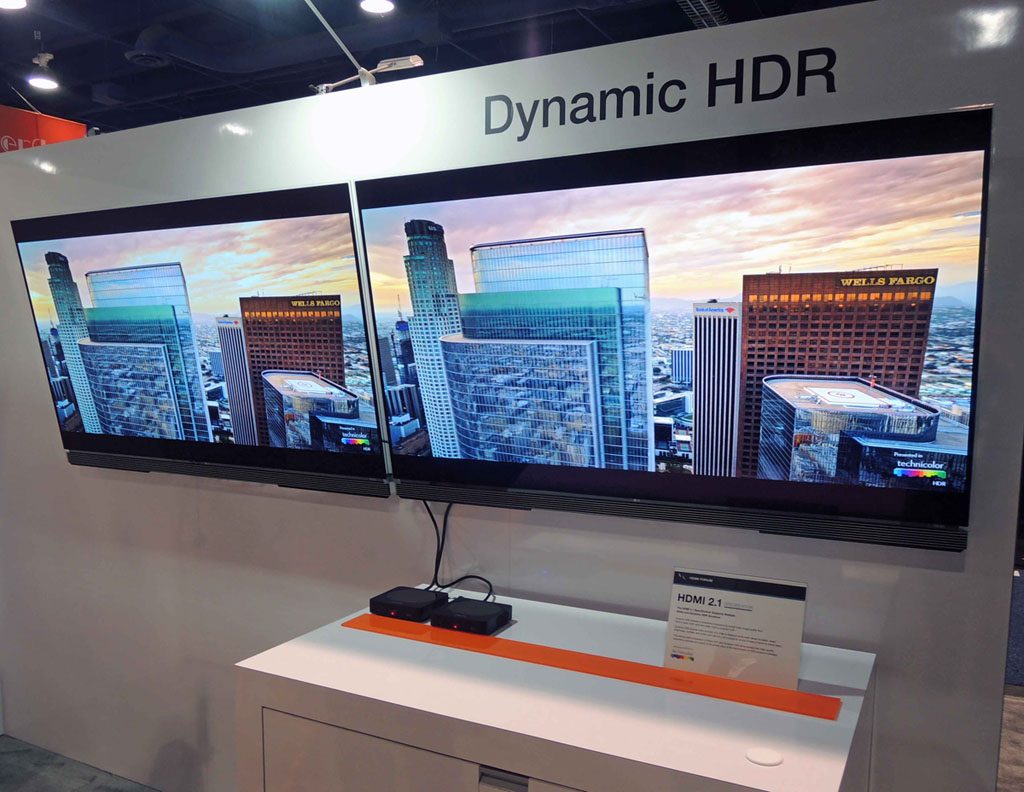
Dynamic HDR metadata transforms how televisions render high dynamic range content, and most consumers have no idea it exists. Unlike static HDR metadata, which applies a single tone-mapping solution to an entire film, dynamic metadata optimizes each scene individually, preserving color volume where it matters most. Samsung's 2017 HDR lineup already supports SMPTE ST.2094-40, the standard codifying this technology. Understanding tone mapping and color volume could change how you evaluate your next TV purchase.

Ken Werner
Columns

HDR: What’s It All About, and How Does It Affect Interfacing?

High dynamic range imaging is reshaping how televisions reproduce light, color, and shadow - but its impact on signal interfacing is where things get technically demanding. HDR's expanded luminance range and wider color gamut dramatically increase data payloads, pushing HDMI 2.0 to its limits and forcing tradeoffs in color resolution and compression. Understanding what 'HDR compatible' actually means - and what it doesn't - reveals a landscape where speed, not magic, determines performance.

Pete Putman
Columns

HDMI 2.1: The Need For Speed Continues

HDMI 2.0 barely squeezed 4K/60 through its 18 Gb/s pipe, leaving HDR and wide color gamut stranded without adequate bandwidth. HDMI 2.1 answers with a jaw-dropping 48 Gb/s, achieved through an extra data lane, doubled per-lane speeds, and a leaner 16b/18b coding scheme that cuts overhead from 20% to 12%. Whether this spec translates into real products quickly enough to matter - before AV-over-IP rewrites the rulebook entirely - is the question worth watching.

Pete Putman
column

Ultra HDTV, HDMI 2.0, and HDCP 2.2 – Oh, What A Tangled Web We Weave…

Buying a Samsung UHD Blu-ray player to pair with a Samsung Ultra HDTV sounds foolproof - until HDCP 2.2 handshake failures force 1080p downconversion and a $400 upgrade kit enters the picture. Real-world compatibility between HDMI 2.0 devices and copy-protection standards remains a minefield for early adopters. If you're eyeing a 4K setup, the lessons buried in this frustrating saga may save you serious money and headaches.

Pete Putman
Columns

Samsung Moves Front & Center With HDR

Samsung gathered journalists and engineers at its Manhattan showroom to tackle one of TV's most pressing challenges: measuring and calibrating HDR displays. With peak brightness hitting 1000 cd/m2 and quantum dot backlights pushing colors beyond anything conventional LEDs can manage, the old calibration tools simply don't cut it anymore. New Ultra HD Blu-ray test patterns and updated HDMI standards are rewriting the rulebook - and the implications for every HDR TV buyer deserve close attention.

Ken Werner
Columns

The End Of One Era And The Start Of Another

Panasonic's decision to shutter its Himeji LCD panel factory signals more than one company's retreat - it marks a seismic shift in the global TV market. With no Panasonic sets available at major U.S. retailers and Ultra HD models outnumbering Full HD offerings at Best Buy, the industry is accelerating toward 4K faster than anyone predicted. Chinese brands like Hisense and TCL are driving prices to jaw-dropping lows, and the full story of who wins this race is still unfolding.

Pete Putman
column